Sed diam nonummy nibh euismod tincidunt
Ut laoreet dolore magna aliquam erat volutpat. Ut wisi enim ad minim veniam, quis nostrud exerci tation ullamcorper suscipit lobortis nisl ut aliquip ex ea commodo consequat. Duis autem vel eum iriure dolor in hendrerit in vulputate velit esse molestie consequat, vel illum dolore eu feugiat nulla facilisis at vero eros et accumsan et iusto odio dignissim qui blandit praesent luptatum zzril delenit augue duis dolore te feugait nulla facilisi.
Regulatory compliance does not pause for capacity constraints
H₂S release rate assessments are a required component of well licensing across the WCSB. They are safety-critical, compliance-critical, and frequently schedule-critical. And yet, for many operators, this workstream becomes a bottleneck – not because regulations are unclear, but because completing a technically defensible assessment requires more than data alone.
Teams must validate inputs, apply professional judgment, document assumptions, and produce a submission-ready assessment aligned with AER Directive 056 expectations. When internal engineering or regulatory resources are stretched, this work competes directly with higher-value activities like well design, drilling execution, and program planning.
The result is familiar: internal strain, schedule pressure, and risk introduced by rushed or fragmented processes.
H2SComplete exists to change that dynamic.
What RegulatorySuite delivers
RegulatorySuite is XI Technologies’ pre-licensing research and compliance platform, designed to help operators in Alberta and British Columbia move through regulatory requirements with greater speed, consistency, and confidence.
It includes:
- H2SReports, a guided application for H₂S release rate research and calculations
- H2SComplete, a turnkey, expert-delivered H₂S release rate assessment service
- SurfaceCasing Report, supporting Directive 008 and Directive 036 compliance
Together, these tools support a structured regulatory workflow built on enhanced datasets sourced from original government records and processes aligned with regulator expectations.
RegulatorySuite reduces effort, reduces risk, and improves turnaround – without sacrificing defensibility.
What H2SComplete is and why teams rely on it
H2SComplete is a turnkey service that delivers a fully prepared H₂S release rate assessment for compliant well licensing under AER Directive 056.
It is designed for a practical reality many operators face: having access to data and tools does not eliminate the need for expert analysis. A compliant H₂S assessment requires a qualified professional to interpret the data in the context of a specific well and document that rationale in a way that can withstand regulatory review.
H2SComplete closes the gap between research and submission-ready documentation.
Rather than pulling internal engineers into time-consuming analysis and documentation, operators delegate this discrete compliance task to experienced analysts – receiving a complete, defensible assessment package in days, not weeks.
Reliable analysis teams can stand behind
H2SComplete assessments are prepared by professionals with deep regulatory and technical experience, including accredited engineers, geologists, regulatory experts, and former AER auditors.
This matters because in H₂S compliance, credibility is not abstract. A release rate number is only as defensible as the methodology, interpretation, and documentation behind it. H2SComplete delivers analysis aligned with regulatory expectations, applied correctly to the well, and documented with professional diligence.
For operators, this translates into confidence – both at the point of submission and later, if questions arise.
A scoped service, designed for compliance – not overreach
H2SComplete is intentionally well-defined.
It combines reliable information with expert analytical interpretation to qualify results and produce a report that supports well license application preparation. XI delivers the assessment package and documentation, while the operator retains final accountability and sign-off, involving both engineering and geology.
This is not a limitation. It is the correct compliance posture.
For operators without in-house engineering or geology availability, XI can coordinate with partner analysts on a consulting basis to extend the scope as needed.
Clear boundaries protect both technical integrity and regulatory defensibility.
Faster turnaround without sacrificing diligence
H2SComplete is designed for speed, but not shortcuts.
Typical delivery timelines range from 4–7 business days, depending on well complexity and location, with rush options available in 2–4 business days when timelines compress. This is significantly faster – and more predictable – than traditional consulting engagements, while remaining aligned with Directive 056 requirements.
Cost is similarly disciplined. Most assessments fall within the hundreds to low-thousands range, allowing operators to manage spend without compromising quality.
Documentation ownership and audit readiness by default
H2SComplete quietly solves a governance problem many teams encounter later.
All documentation and source material are provided to the client, and the H2SReport itself is ordered under the client’s account. This allows teams to review analyst comments, understand how conclusions were reached, and retain continuity for future work.
If an audit or internal review occurs months or years later, teams are not reconstructing decisions under pressure. The record already exists.
How H2SComplete improves real workflows
H2SComplete is not about outsourcing responsibility. It is about removing a specialized task from becoming the gating factor in licensing.
Reduced internal burden Engineering and regulatory teams stay focused on design, execution, and decision-making – rather than data hunting and documentation assembly.
Improved consistency across wells Assessments follow a consistent methodology, reducing variance across multi-well programs.
Stronger defensibility Professional analysis and complete documentation improve audit readiness and governance posture.
Predictable timelines and cost Operators gain certainty in both schedule and spend during critical licensing windows.
Consider a team managing a compressed licensing timeline
A mid-sized operator is preparing several well license applications while engineering capacity is focused on drilling optimization and vendor coordination. H₂S assessments are mandatory, but internal resources are stretched thin.
By delegating the assessment package to H2SComplete, the operator receives expert-prepared documentation aligned with Directive 056 expectations – without pulling senior staff into a compliance bottleneck.
The outcome is practical: stabilized timelines, better use of internal expertise, and improved documentation quality that holds up beyond approval.
When H2SComplete is the right fit—and how it complements H2SReports
H2SReports and H2SComplete are designed to work together.
Many teams use:
- H2SReports for standard workflows, repeat work, and internal consistency
- H2SComplete when timelines are tight, internal capacity is limited, or the risk profile warrants full delegation
This hybrid approach allows operators to scale compliance efforts without relying on heroics or single-person expertise.
Why this matters
H₂S compliance should not hinge on last-minute effort or internal bandwidth constraints. The most effective regulatory workflows are structured, repeatable, and defensible.
H2SComplete helps teams:
- Maintain throughput during peak licensing periods
- Control cost without cutting corners
- Strengthen audit readiness and documentation governance
- Reduce operational risk tied to capacity and variability
Diligence and efficiency do not need to compete.
Learn more or get started
H2SComplete is part of XI Technologies’ RegulatorySuite, trusted by operators across the WCSB to simplify compliance and improve workflow efficiency.
To get started, operators can submit a simple request form to receive an accurate estimate of time and cost.
When the risk of delay is real, and internal capacity is better spent elsewhere, H2SComplete is built to deliver compliant, defensible H₂S assessments – fast.
Regulatory compliance does not need to slow teams down
H2S compliance is a required step in well licensing across the WCSB, but for many operators it remains one of the most time-consuming and uncertain parts of the pre-licensing process.
Not because the regulations are unclear.
Because the work is often fragmented.
Teams are asked to source historical data, validate assumptions, calculate release rates, document methodology, and ensure alignment with AER Directive 056. Too often, this happens across spreadsheets, disconnected data sources, manual calculations, and versioned documents that are difficult to track and reuse.
The result is predictable. Extra time spent. Rework across wells. Increased risk during review or audit. And internal teams pulled away from higher-value work.
XI Technologies built H2SReports to change that dynamic.
What RegulatorySuite delivers
RegulatorySuite is XI Technologies’ pre-licensing research and compliance platform designed to help operators in Alberta and British Columbia move through regulatory requirements with greater speed, consistency, and confidence.
It includes:
- H2SReports, a guided application for H2S release rate assessments
- H2SComplete, a turnkey, expert-delivered assessment service
- SurfaceCasing Report, supporting Directive 008 and 036 compliance
Together, these tools support a structured regulatory workflow using enhanced datasets sourced from original government records and guided processes aligned with AER expectations.
RegulatorySuite reduces effort, reduces risk, and improves turnaround without sacrificing defensibility.
What H2SReports is and why teams rely on it
H2SReports is the industry’s leading H2S research application, purpose-built for pre-licensing workflows.
It helps teams complete H2S release rate assessments faster and more consistently while maintaining a clear record of how results were reached.
At its core, H2SReports combines trusted data with a guided workflow.
Reliable data teams can stand behind
XI has more than two decades of experience in H2S release rate assessments. The data within H2SReports is compiled from original government sources and validated to support assessments that satisfy AER and CAPP requirements.
For end users, this means less time questioning inputs and more confidence in outcomes.
A guided workflow aligned with Directive 056
H2SReports walks users through the steps required to assess H2S release rate potential in a structured, repeatable way. Each step is documented, and assumptions are captured as the work is completed rather than reconstructed later.
This improves consistency across wells and across teams, especially in multi-well drilling programs.
How H2SReports improves real workflows
H2SReports is not just about compliance. It is about making regulatory work easier to execute and easier to defend.
Faster turnaround with less rework
Users can reuse prior assumptions, comments, and adjustments for future wells. This reduces duplication and speeds up repeat work in the same area.
Built-in collaboration and accountability
Teams can securely share reports across the organization, track who made changes, and avoid confusion caused by multiple file versions. This is especially valuable when engineering, regulatory, and leadership teams all touch the same deliverables.
Audit-ready documentation by default
Every step, assumption, and update is recorded within the system. If questions arise later, teams can point to a clear, traceable record of work rather than rebuilding documentation under pressure.
Accessible anywhere, when timing matters
Because H2SReports is web-based, teams have secure access from any internet-connected device. This supports distributed teams and time-sensitive licensing schedules.
Integrated compliance across directives
H2SReports integrates with XI’s SurfaceCasing Report, allowing information to flow between workflows and reducing duplicated effort when addressing Directive 008 and Directive 036 requirements.
Consider a team planning a multi-well drilling program in a defined area
Before H2SReports, H2S assessments may have been completed using spreadsheets and manual data sourcing. Results varied by well, assumptions were repeated, and documentation was often finalized late in the review process.
After standardizing on H2SReports, the team completes assessments using a consistent dataset and workflow. Prior work is reused where appropriate. Collaboration improves. Review cycles shorten. Documentation is ready as the work is completed.
The value is not theoretical. It shows up as saved time, fewer handoffs, and greater confidence across the organization.
When H2SReports is the right fit and when H2SComplete adds value
H2SReports is ideal for teams that want control, consistency, and repeatability in their regulatory workflows.
There are times, however, when full delegation makes sense.
H2SComplete provides a turnkey H2S release rate assessment prepared by a recognized expert, often an accredited engineer. It includes analysis, validation, calculations, and documentation, typically delivered in three to five days.
Many operators use both.
- H2SReports for standard workflows and program consistency
- H2SComplete when timelines are tight, internal capacity is limited, or risk warrants expert delivery
Why this matters
H2S compliance should not depend on last-minute effort or individual expertise. The most effective regulatory workflows are structured, repeatable, and defensible.
H2SReports helps teams:
- Reduce internal cycle time
- Improve consistency across wells
- Strengthen audit readiness
- Free up technical staff for higher-value work
H2SReports makes required regulatory work easier to execute and easier to stand behind.
Learn more or see it in action
H2SReports is part of XI Technologies’ RegulatorySuite, trusted by operators across the WCSB to simplify compliance and improve workflow efficiency.
If you want to see how H2SReports fits into your pre-licensing process, the best next step is a product walkthrough or demo. XI’s team can show how the data, workflow, and reporting come together to support faster, more confident licensing decisions.
For teams looking to move faster without sacrificing defensibility, H2SReports is built to deliver exactly that.
Most teams don’t struggle because they lack data. They struggle because the signals that matter are scattered across spreadsheets, screenshots, and disconnected tools.
With AssetBook Graphs, existing data is brought together in a way that makes it useful for real decisions. Without that assembly layer, entire categories of insight stay out of reach, not because the data isn’t there, but because it never shows up in a decision-ready form.
Production Truths
Competitor analysis and triaging various potential acquisition candidates can often be an arduous task. Production analysis often breaks down when scale overwhelms signal.
Without Graphs, large operators dominate averages, inflection points disappear, and teams spend more time debating curves than agreeing on conclusions. The real question is whether an asset is actually competitive.

With Graphs, stacked time-slice views and peer trendlines replace single-curve storytelling. Dominant operators can be filtered out so comparisons reflect performance rather than sheer scale. You can easily disseminate which years have added to a company or an areas total production and identify which years may have more favourable declines.

Probability views are used to frame ranges and thresholds, and to predict outcomes. This helps teams talk about upside and downside without anchoring on a single, best-case scenario.

It is also very easy to see how zones are becoming depleted over time or how technology or drilling/completion techniques have actually improved things over time by Grouping by First Prod. Date, and setting the date ranges.
Just as importantly, context is built in. Working interest versus gross, dollars versus dollars per hectare, rates versus cumulative volumes. These distinctions are clear from the start, which reduces rework and defensiveness later in the process.
Workflow Fit
Even strong analysis loses value if it slows teams down.
Without Graphs, analysts repeatedly rebuild the same charts and leadership ends up debating methodology instead of decisions. The underlying question becomes whether the team can screen faster and still stand behind the result.
Graphs supports a more direct workflow. An area of interest can be drawn directly on the map and every graph updates immediately, without ad-hoc data wrangling.
Teams can use Graphs for fast first-pass screening, then export clean data to Excel or tools like ValNav for deeper economic work. What used to take hours can be done in minutes.
A Practical Reality Check
Yes, pieces of this can be recreated elsewhere. But doing so costs time, consistency, and context. In practice, most teams lose working-interest awareness, peer normalization, or both, which slows decisions and weakens confidence.
Once teams see these views working together, it becomes difficult to go back.
See the Insights Before the Market Moves
Join us for the AssetBook Graphs Webinar, where we’ll walk through real-world land intelligence examples.
You’ll learn how to:
- Understand a potential acquisition’s production profile at a glance
- Compare assets and peer groups in seconds
- Identify which fields and zones actually drive production
- Prepare smarter land bids using bonus and probability graphs
- Frame upside and risk with time-slice and probability views
Stop reacting to outcomes. Start shaping them.
Register now for the Graphs Webinar – February 11 at 9:00 AM
Most teams don’t struggle because they lack data. They struggle because the signals that matter are scattered across spreadsheets, screenshots, and disconnected tools.
With AssetBook Graphs, existing data is brought together in a way that makes it useful for real decisions. Without that assembly layer, entire categories of insight stay out of reach, not because the data isn’t there, but because it never shows up in a decision-ready form.
Here are three key places Teams tend to realize benefit with AssetBook Graphs.
Land Intelligence
Land teams are constantly trying to answer a simple question: where is activity happening, and what is likely to happen next?
Without AssetBook Graphs, expiry risk is often identified late, bonus expectations are based on anecdotal information, and teams end up reacting instead of sequencing their work. The underlying decision is always the same, where should we act first?
Graphs can change this by making patterns visible early.
Cumulative bonuses paid by company, year, and area quickly show who is bidding aggressively and where capital is actually flowing. It becomes a practical proxy for market appetite that is grounded in evidence rather than conversation. Interactivity makes it easy to hone in on recent years or perform historical analysis on older years.
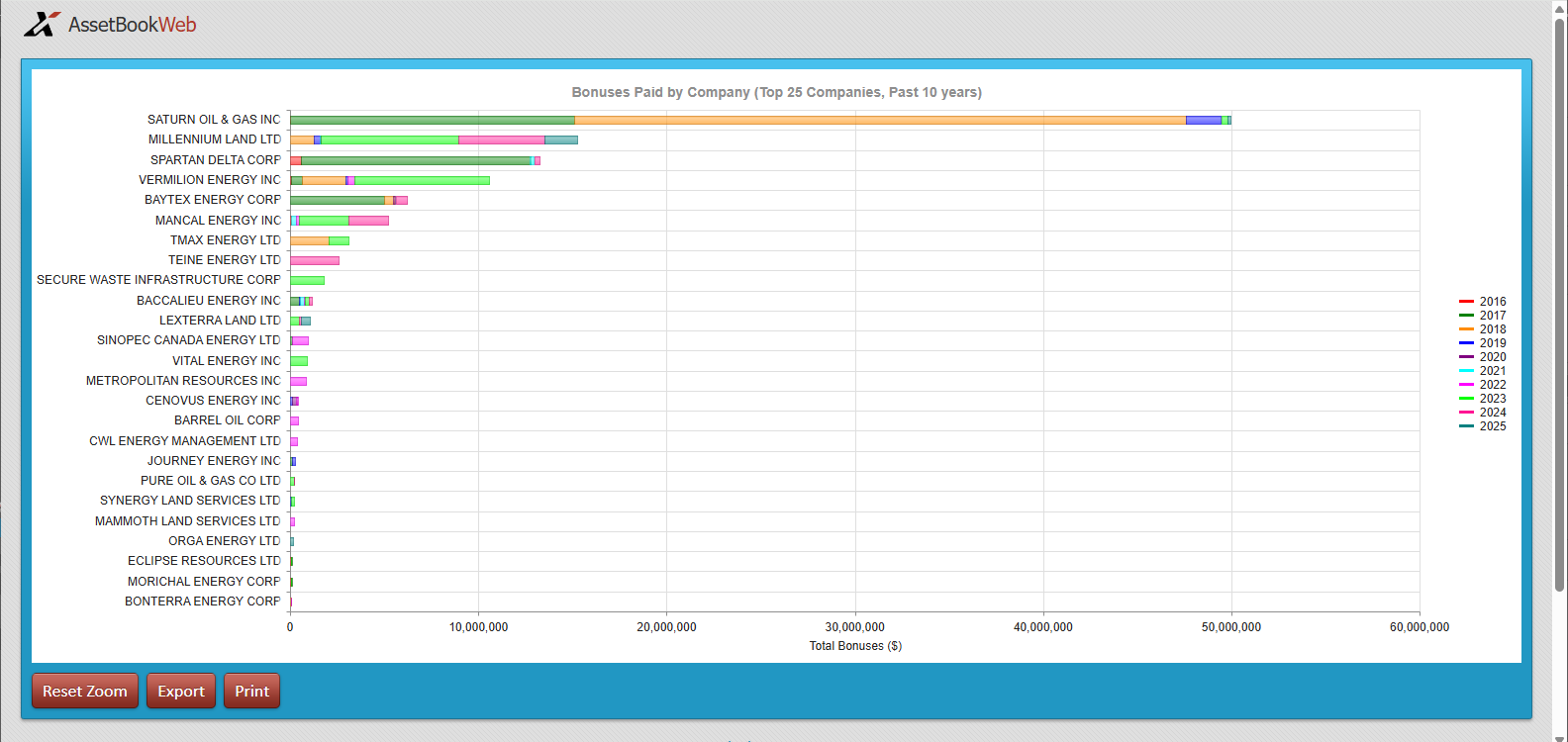
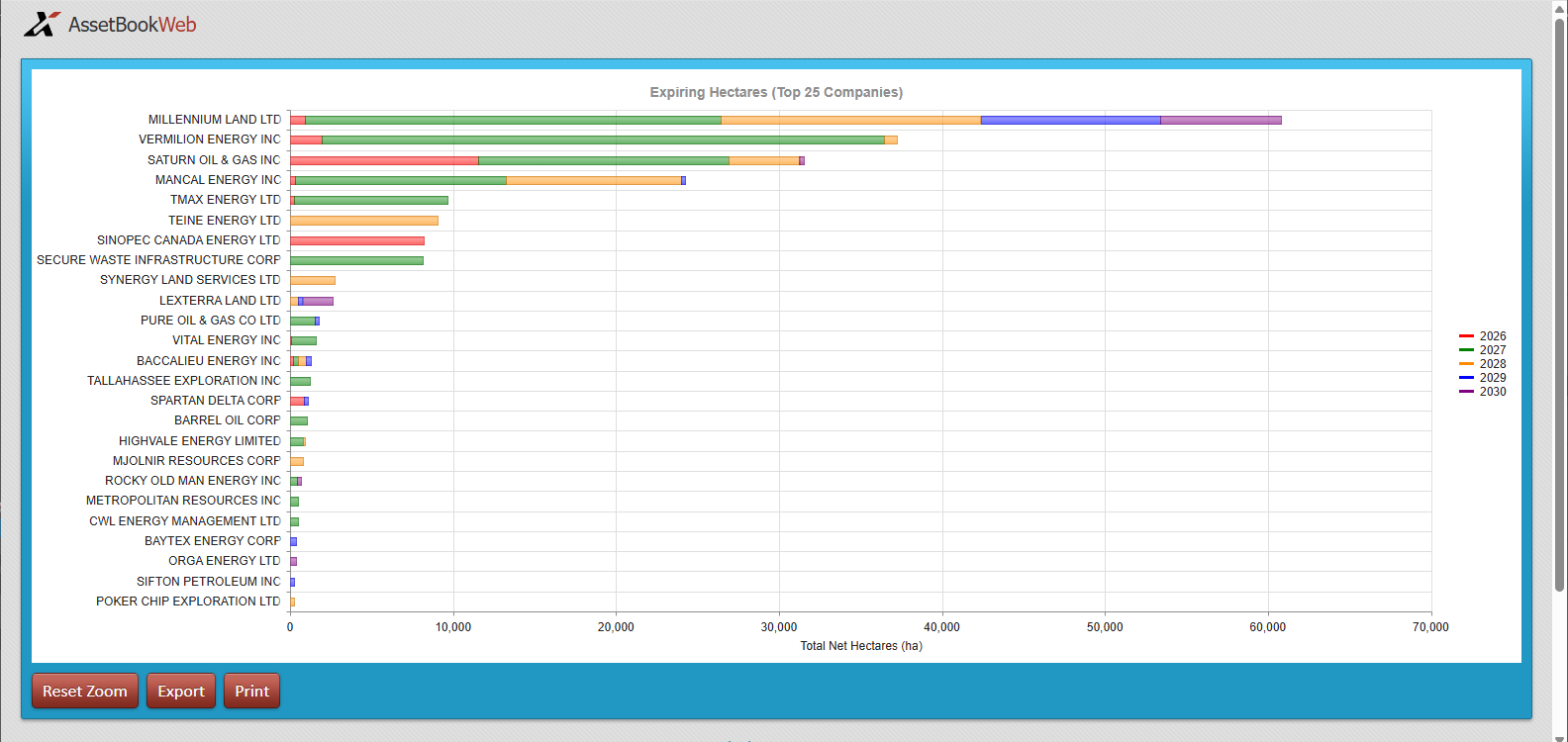
Near-term lease expiries and undeveloped hectares can be surfaced and viewed spatially, which reveals clusters and timing issues, early enough to act. Farm-ins, swaps, extensions, and competitive bids don’t need to be last-minute exercises when you have the information presented properly. The graph below shows the amount of land that each company in the area that is expiring over the next several years and could be a good opportunity for a farm-in.
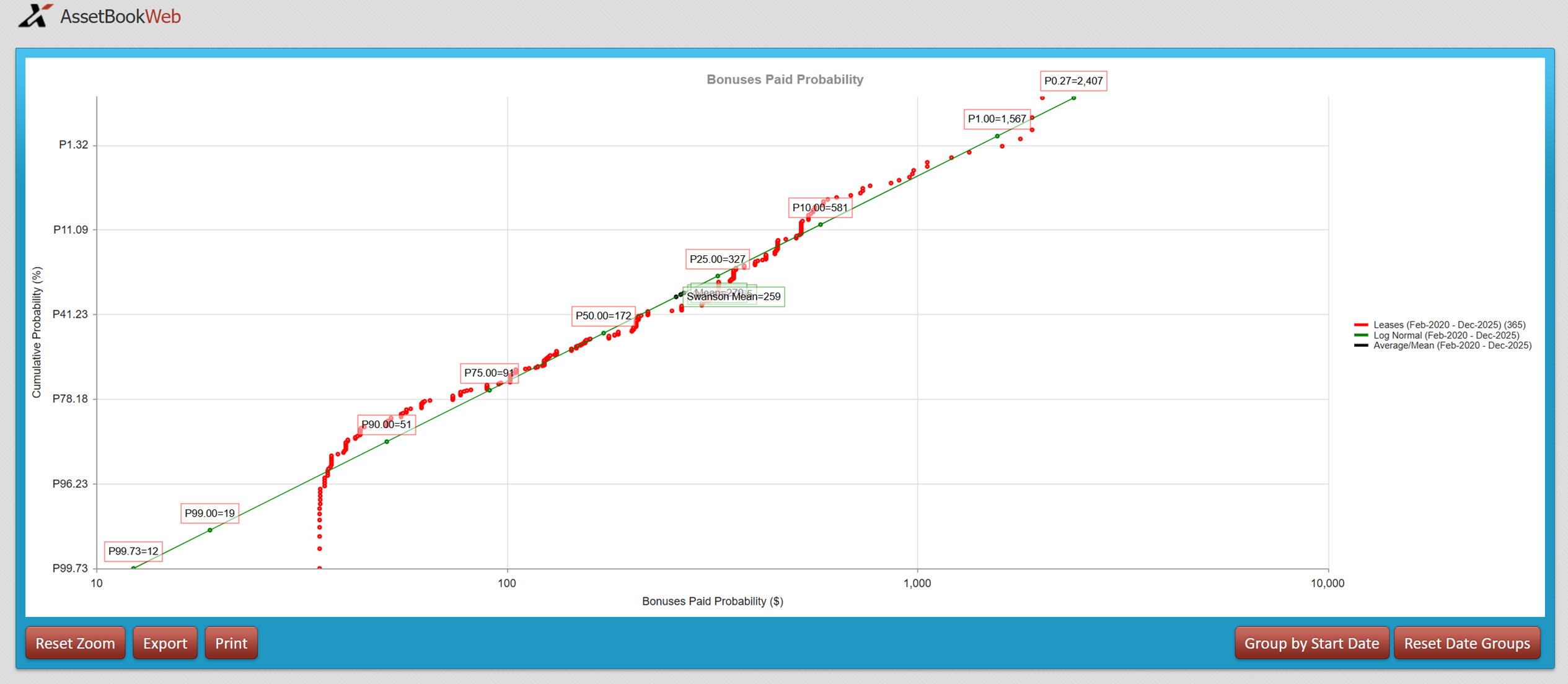
Instead of rebuilding views or guessing what exists, land teams have access to a consistent set of ready-made views that answer the questions they get asked every week. The value is not novelty; it is consistency and defensibility. Statistical analysis can be done with spreadsheets but having a ready-made template allows for better decision making. The graph below shows bonuses ($/ha) paid and the associated averages and probabilities (P10, P50, P90 etc.)
AssetBook Graphs turns everyday land data into decision-ready intelligence. Instead of piecing together spreadsheets or relying on anecdotal market read-throughs, teams get immediate visibility into where activity is happening, where risk is building, and where opportunity is emerging. For subscribers, these insights are part of the daily workflow. For AssetBook Graphs non-subscribers, they remain hidden in disconnected data. If your team is still reacting to land outcomes instead of shaping them, it may be time to see what AssetBook Graphs makes visible.
See the Insights Before the Market Moves
Join us for the AssetBook Graphs Webinar, where we’ll walk through real-world land intelligence examples.
You’ll learn how to:
- Understand a potential acquisition’s production profile at a glance
- Compare assets and peer groups in seconds
- Identify which fields and zones actually drive production
- Prepare smarter land bids using bonus and probability graphs
- Frame upside and risk with time-slice and probability views
Stop reacting to outcomes. Start shaping them.
Register now for the Graphs Webinar – February 11 at 9:00 AM
In the world of acquisitions and divestitures, the best opportunities rarely announce themselves. They hide in datasets, legacy ownership structures, old well files, and liability frameworks that look different depending on who compiled them. For land and business development professionals, the challenge isn’t just finding assets — it’s understanding them well enough to decide whether they’re worth pursuing.
Production and reserves still matter. But increasingly, the differentiator between a good deal and a costly misstep comes down to how clearly a team understands the liability side of the equation, and how early they understand it.
- Screening
- Evaluation
- Due Diligence
- Post-Close Integration
Each of these stages depends on reliable, timely, and comparable liability data. And today, those who invest in understanding ARO early often find themselves ahead of their competition and operating from a position of confidence — not uncertainty.
1. Screening: Finding Opportunities That Truly Fit
The first stage of A&D is always about narrowing the field. What is in my area of interest? What upside potential is possible with the land portfolio? Where can new technology increase my production yield? These are all questions often asked in the screening phase, but often overlooked is the liability information and without clear reliable information, the screening phase can mislead you.
Land and BD professionals often face challenges such as:
- Assets that have changed hands multiple times and are difficult to track
- Working interest that isn’t obvious from public sources
- LLR values that differ across jurisdictions
- Historical issues or incidents that aren’t surfaced in high-level summaries
In some cases, assets that appear to belong to one company may actually be nested under a different corporate structure and a company’s previous acquisitions may not have undergone proper clean up, obscuring the truth behind ownership.
This uncertainty can push teams toward more risk than intended or cause them to overlook strong opportunities. Early liability insight solves this by making screening more consistent, more complete, and more strategic.
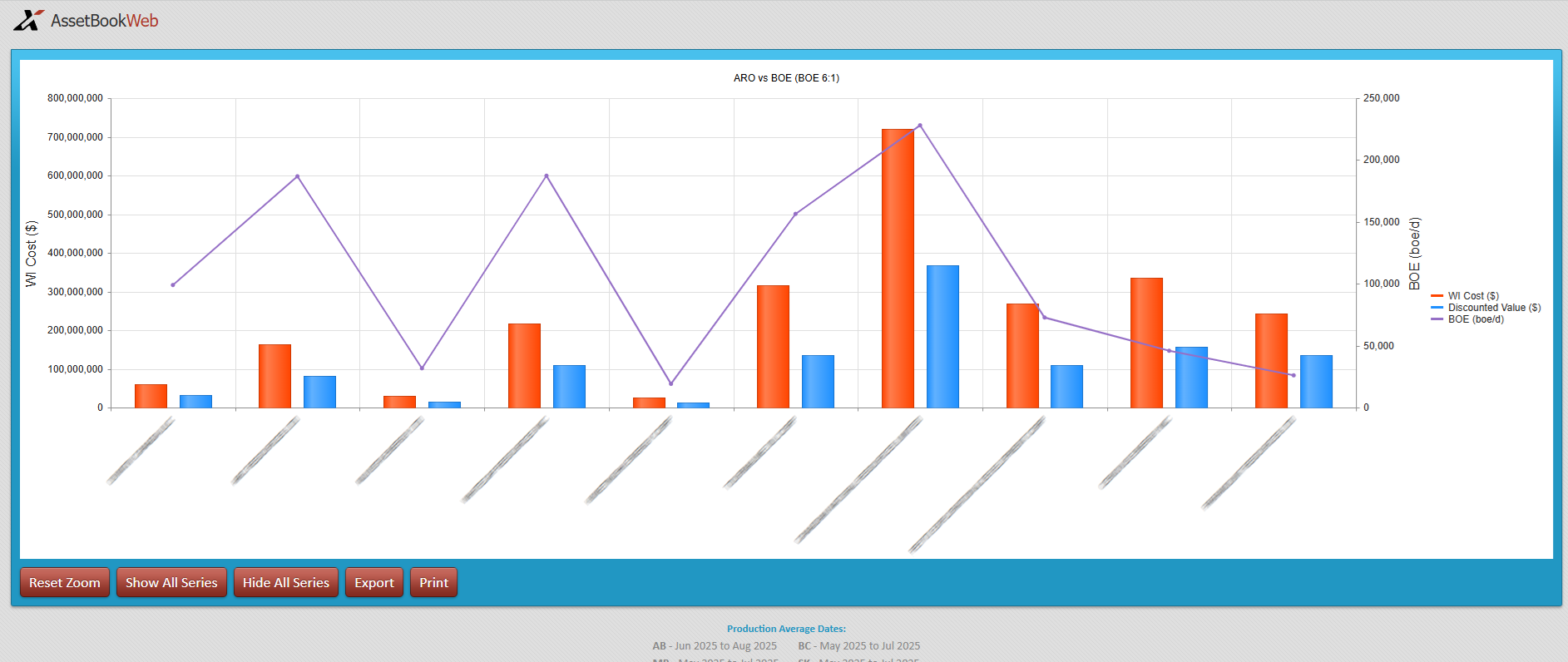
2. Evaluation: Building an Apples-to-Apples Comparison
Once a target passes initial screening, the goal becomes understanding how it stacks up against other options. At this stage, liability clarity supports deeper questions:
- How much of the liability is tied to inactive wells?
- How soon are abandonment and reclamation activities likely to be required?
- How do different cost models (government, internal, industry-standard) impact total exposure?
- How do timelines, age categories, or risk classes compare across packages?
Teams that rely on spreadsheets for this phase quickly learn their limitations:
- They struggle with scenario switching
- They require constant manual updates
- They lack traceability
- They create inconsistencies across evaluations
Land and BD teams need a common lens through which to compare multiple opportunities — especially when cost assumptions vary widely between sellers, regulators, internal teams, and lenders.
A structured ARO evaluation creates clarity. It allows you to compare two or ten packages with confidence, knowing that each is being assessed using the same assumptions, the same parameters, and the same methodology.
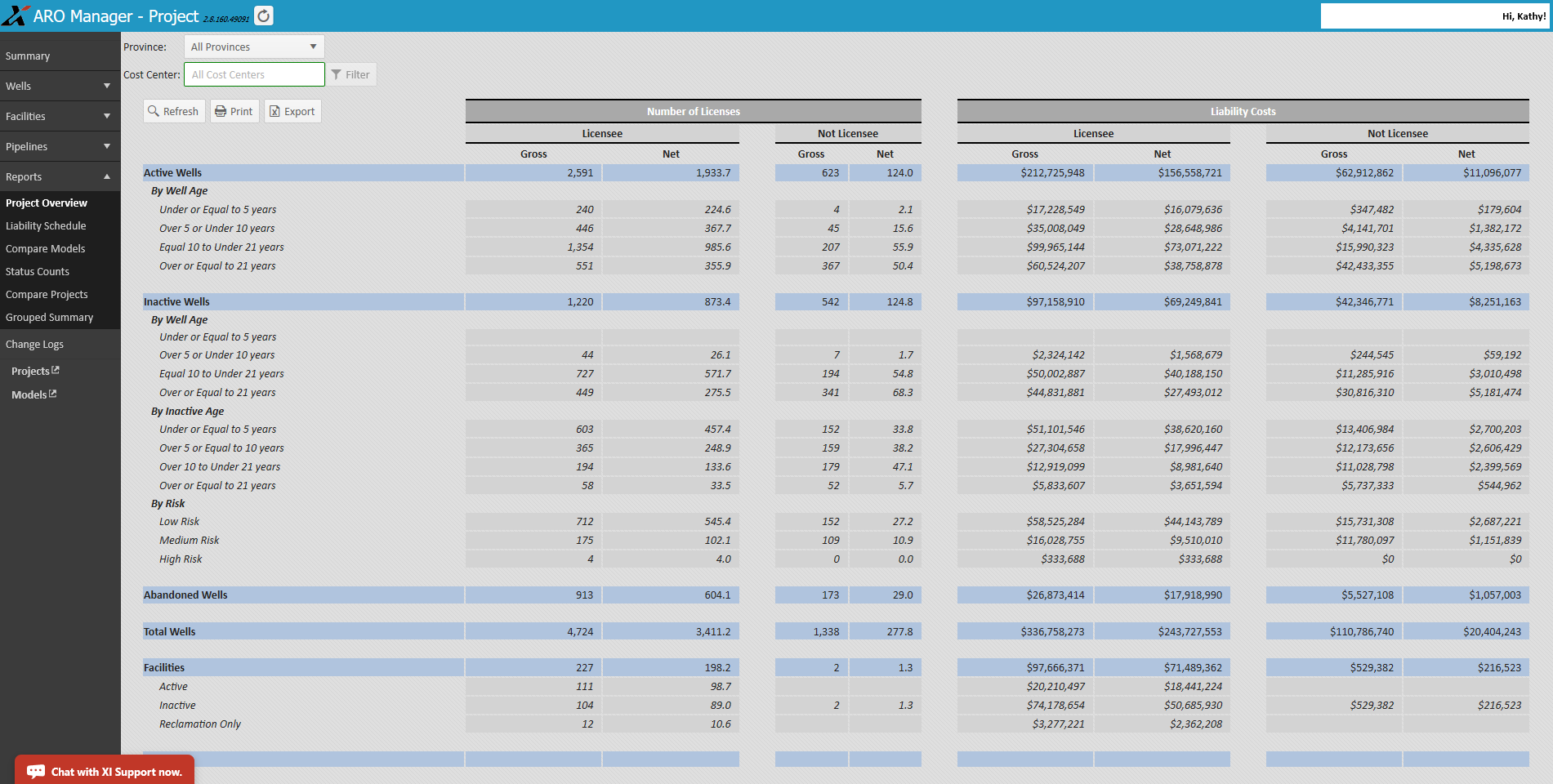
3. Due Diligence: Verifying What You Think You Know
Once the data room opens, the focus shifts from estimation to validation.
However, due diligence comes with its own challenges:
- Well lists may be incomplete or formatted inconsistently
- Working interest may not align with public data
- Cost assumptions may differ from your internal standards
- Incident history may surface new red flags
At this stage, teams need a way to incorporate proprietary information into the liability lens they’ve already built — not start from scratch. This allows them to:
- Confirm that nothing is missing
- Identify issues the seller may not have highlighted
- Reassess valuation based on the most accurate inputs available
- Ensure the package still aligns with strategic objectives and valuation assumptions.
Liability analysis in due diligence is ultimately about protecting the deal — or deciding not to advance it.
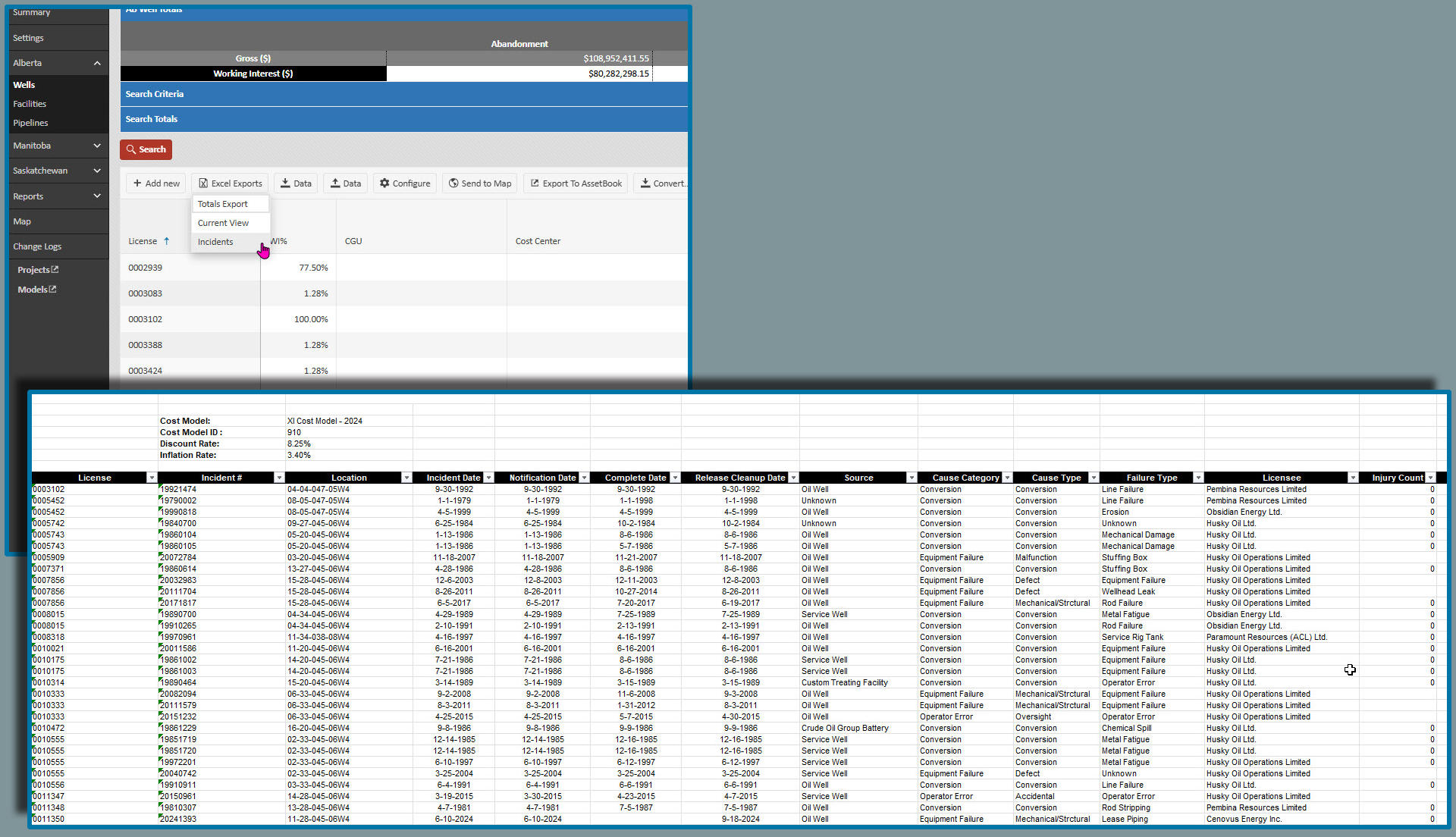
4. Post-Close Integration: Turning Evaluation Into Action
Once a deal closes, liability work becomes real work.
Post-close, land and BD teams must transition their evaluation into operational planning. This stage becomes significantly easier when the work done during screening, evaluation, and due diligence carries forward seamlessly.
With a clear, structured ARO view:
- New assets can be integrated without rebuilding spreadsheets
- Working interest and assumptions flow directly into operational ARO processes
- Timelines and obligations become visible immediately
- Priority high-risk assets surface faster
- Teams can begin regulatory filings, internal reporting, and planning without delay
For organizations that acquire assets regularly, this continuity between A&D evaluation and long-term liability planning becomes a major strategic advantage.
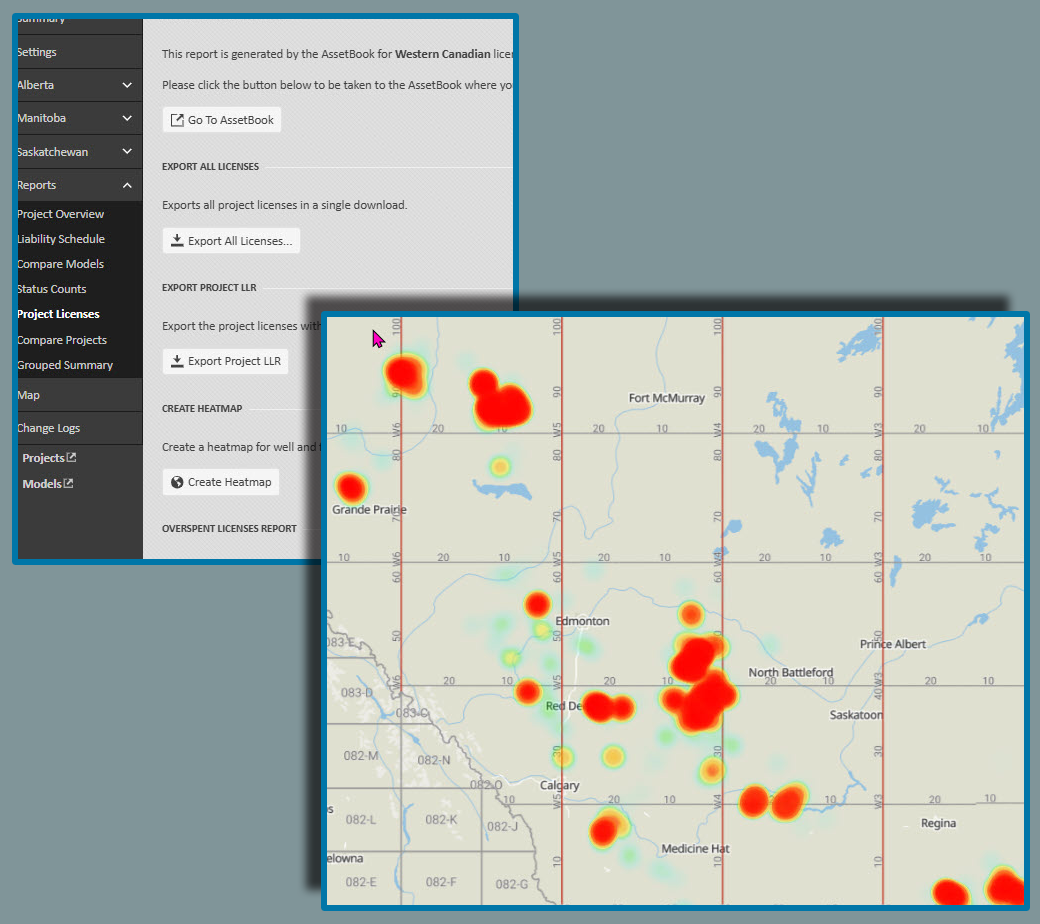
Why ARO Insight Has Become Strategic — Not Optional
Across the industry, A&D teams are recognizing a simple truth:
Liability insight is now as important as production, reserves, or economics.
A strong ARO evaluation process helps teams:
- See what lenders and regulators will see
- Identify red flags before committing resources
- Avoid overpaying for liabilities
- Strengthen deal positioning
- Reduce internal uncertainty
- Build better cross-department alignment
It protects buyers from hidden exposure and dramatically improves decision quality.
Why A&D Teams Are Moving Toward an “Industry Standard” Approach
The final question for land and BD professionals is no longer whether they should incorporate ARO insight early in the process — it’s how they should do it.
Teams that take liability management seriously tend to converge on the same conclusion:
A&D evaluation requires a standardized, trusted, industry-aligned ARO tool — not spreadsheets, stitched-together data, or one-off calculations.
A strong ARO system provides:
- Accurate working interest inputs
- Standardized or customizable cost models
- Year-by-year liability schedules
- Consistent assumptions across deals
- Audit-ready transparency
- Faster, more defensible decisions
For teams committed to disciplined growth, this has quietly become the new standard.
While many tools exist, the A&D community increasingly gravitates toward platforms that combine speed, accuracy, and reliability — platforms like XI’s ARO Manager — that give them the confidence to evaluate opportunities with clarity and the foresight to pursue only the deals that truly fit.
—
Missed our Webinar on AssetBook ARO Manager for A&D?
Watch it online now and learn to:
- Perform A&D scenario analysis using any combination of properties and ownership structures
- Calculate potential ARO using XI’s standardized cost model, based on real-world abandonment and reclamation data from the WCSB
- Upload and integrate proprietary corporate ARO cost data for enhanced precision
- Monitor and optimize liabilities from acquisition through abandonment and reclamation
- Collaborate, save, and report with AssetBook’s secure, web-based platform
—
📅 Ready to Level Up? Check Out Our New Training Calendar!
Stay ahead with our latest Training Calendar, featuring all upcoming online and in-person courses. Whether you’re looking to sharpen your skills or dive into something new, there’s a session for you.
👉 View the Training Calendar now and reserve your spot today!
—
Curious to learn more about XI’s product suites? Book a product demo today!
The number of users for XI Technologies modules is not limited to individual seats. The modules are accessible on a corporate wide subscription. Your company may have a XI Technologies AssetBook subscription. To register for access to your corporate account, click here.
—
Each week, XI Technologies uncovers trends and insights using our enhanced data and software focused on the WCSB. If you’d like Word to the Wise delivered directly to your inbox, subscribe here. For more tips and to learn about how XI’s AssetSuite can help with your high-level analysis visit XI’s website or contact XI for a demo.
Don’t Go Through Pain Again – Real Stories of Streamlined ARO Management
Recently we have been talking a lot about the problem with spreadsheets and why you should consider a different tool for tracking and reporting asset retirement obligations (ARO). In this article, we share real world stories from a variety of professionals within the industry’s finance and operations teams. Our clients tell us regularly about how their workflow has improved since moving from a two-dimensional overly complicated spreadsheet into a relational, centralized database. We share three of our most interesting tales with you here.
The Day the Wizard Left
Our first story is about a client who was tracking their ARO in one of the most complex spreadsheets we had ever seen (and we’ve seen a lot!). By the time our team was called in to help bring order to the chaos, we realized how it got that way.
The company’s early ARO tracking started out as a very simple spreadsheet. This was a mid-sized producer with approximately 23,000 BOE (barrels of oil equivalent) per day and interest in over 7,200 oil and gas wells. They had kept up with their own ARO tracking as a matter of due process, relying on an internal Excel guru who appeared to have everything under control.
Then they made a sizeable acquisition.
And then they lost their spreadsheet wizard.
The wizard was the person who built the company’s original ARO spreadsheet and lovingly nurtured it to the point where it became a huge, complex, multi-coloured, formula-obscure spreadsheet. Naturally, the wizard took great pride in their spreadsheet. But the rest of the team was never in on all the complexities, so upon the wizard’s departure, this giant spreadsheet became a beast that no one wanted to tackle. The beast was tucked away in their IT closet while they desperately sought a new wizard.
Enter XI Technologies. With ARO Manager, the company was spared the angst of hiring a new spreadsheet unicorn. ARO Manager’s centralized database quickly became the solution that helped the company’s finance team regain control across several departments. In the process of onboarding, XI deployed our own implementation wizard who assisted with uploading all the existing well files, along with the newly acquired well list, and swiftly pulled together several key reports.
The CFO looked at the Group Summary Report and gave an audible sigh of relief.
This story has a happy ending. The company is now able to accomplish three things with mere clicks of a few buttons:
- Evaluate new acquisition opportunities with an eye on liabilities.
- Update company liabilities (with new well lists, changed cost models, revised discounts) to equip the leadership team with speedy analysis for ARO decisions.
- Submit reports to banks or auditors with the assurance of SOC compliance.

The Day the Company was Sold
This story’s hero knew the importance of positioning. He came to us with what seemed like a simple ask: help me position my company for sale. He was the president of a junior oil and gas company who was ready to retire.
In a time where a company’s value is based on intense scrutiny of both liabilities and production potential, the ability to be competitive in the mergers and acquisition space depends upon transparency across the board. Our hero knew how important it was to ensure they created a highly transparent view of their liabilities for a potential buyer’s apples-to-apples comparisons. They knew their value, but they wanted to make sure nothing held them back from making a swift deal in today’s market.
Once their wells were entered into ARO Manager, they were able to produce their Liability Schedule, a Discount Schedule, bank packages, internal summaries, and stakeholder snapshots that were widely accepted by all involved.
Their happy story was a successful sale. As for XI, we also celebrated with the easy move of data into a new company that used ARO Manager to integrate their new acquisition.

The Day the Auditor Beckoned
Our final story had a different opening scene. It started with the doomed “uh-ohhh” when the company – a producer with production of approximately 4,800 BOE per day and interests in 2,100 wells – was asked to resubmit their ARO reports to their auditors.
The spreadsheet machine went into overdrive to meet the due date. The small finance team worked overtime. The brows furrowed and sweat dripped down as everyone worked tirelessly to double- and triple-check every Excel input and formula.
The good news: they got the job done, despite their painful spreadsheet.
The bad news: it was the worst audit process they had ever been through.
The best news: they said, “never again” and turned to XI to get ARO Manager so that they would be prepared for the next round.
We are happy to report that this story’s final scene shows the shiny red “easy” button (yes, XI’s red is very similar to Staples), with the company’s finance lead pressing the button each quarter to quickly share their trustworthy SOC compliant report with the auditor.
Post-Story Reviews
The three stories above are about industry professionals who have made the switch from spreadsheets to ARO Manager, resulting in a profound positive impact to their ARO workflows. Here are some additional reviews from those who have also made the transition from spreadsheets:
- Senior Analyst: “Switching to AssetBook’s ARO Manager has been transformative. We no longer have to deal with the inefficiencies and errors that come with spreadsheets. The web-based platform gives us quick access to accurate data, streamlining our workflow and improving overall data accuracy.”
- Operations Manager: “Spreadsheets were prone to version control issues, which made it difficult to manage and access detailed working interest data. Having a centralized, web-based platform eliminates those problems and has improved our decision-making process significantly.”
- Decommissioning Coordinator: “Managing ARO obligations in spreadsheets was incredibly challenging, especially with the volume and complexity of the data. ARO Manager’s web-based platform makes it so much easier to track and update our ARO data, helping us stay compliant and plan decommissioning activities more efficiently.”
If you enjoyed these stories and would like to explore how your company can transition from the pain of spreadsheets to a streamlined database like ARO Manager, contact XI Technologies today.
We’re happy to help you create your own happy ending.
Upcoming Events / Trainings:
Getting the Most Out of Maps Information: Discover the available functions and workflows utilizing all aspects of the mapping tool, including:
- Searching using corners or polygons
- Layering sets of assets on the map
- Searching using mapped assets
- Workflow demonstrations to show assets on the map that meet set criteria
When: April 30th 1pm (Online)
Length: 30 minutes
Check out our new Training Classes & Events calendar page to get the most value from your XI products. More training classes added to the May, June, July Calendar. Would you like to save time by learning pro tips, short-cuts, and added functionality? Want to upgrade your skills and expertise?
Latest Webinars:
ARO Manager for Financial Tracking & Reporting
- Get a more complete picture of asset retirement costs.
- Cost management is a vital part of the business and operating strategy for every Canadian oil and gas producer. But if you are focused primarily on development and operations costs, then you are missing a significant part of the picture.
- AssetBook ARO Manager is the first and only software application specifically designed for estimating and monitoring asset retirement obligations (ARO) in the Western Canada oil and gas sector. For exploration and production companies, ARO Manager provides transparency and SOC-compliant assurance when monitoring and tracking liabilities for financial reporting.
H2S Reporting – Why Accuracy, Efficiency, and Compliance Matters
Struggling to meet H2S reporting requirements with limited resources or time? We’ve got you covered.
In our latest webinar, we provided valuable insights on:
- Regulatory rules and expectations, including revisions to Directive 056.
- How to ensure compliance, find efficiencies, save costs, and work as a team for consistent and transparent APEGA-approved reporting.
- Manage mergers, acquisitions and divestitures with ease (no duplication of reports).
- Learn about H2SComplete as a full solution to help you quickly manage and mitigate risks associated with hydrogen sulfide (H2S) safety.
XI Technologies has moved to our NEW LOCATION:
XI Technologies Inc.
2400 – 500 4th Avenue SW (Altius Centre)
Calgary, Alberta T2P 2V6
Curious to learn more about XI’s product suites? Book a product demo today!
The number of users for XI Technologies modules is not limited to individual seats. The modules are accessible on a corporate wide subscription. Your company may have a XI Technologies AssetBook subscription. To register for access to your corporate account, click here.
—
Each week, XI Technologies uncovers trends and insights using our enhanced data and software focused on the WCSB. If you’d like Word to the Wise delivered directly to your inbox, subscribe here. For more tips and to learn about how XI’s AssetSuite can help with your high-level analysis visit XI’s website or contact XI for a demo.
Did you go through pain managing your Asset Retirement Obligation (ARO) planning with spreadsheets?
If you’ve been using spreadsheets to track your AROs, you’re no stranger to the challenges they bring—whether it’s the constant fear of human errors, struggling with outdated formulas, or trying to collaborate across teams with version control issues. Sound familiar?
In the previous post, we talked about the growing challenges of managing ARO planning with spreadsheets. If you’re still in the trenches, this post is for you. We’re diving deeper into how relying on spreadsheets creates unnecessary pain, costs your organization time and resources, and ultimately undermines the efficiency of your ARO planning efforts.
The Pain You’re Probably Experiencing
If you’re still using spreadsheets for ARO planning, you’ve likely experienced more than your fair share of frustration. Here are a few examples of the pain you might be going through:
- Data Integrity Nightmares: Spreadsheets are prone to errors—simple ones like typos or more complex ones like broken formulas. These mistakes might not surface immediately, but they can lead to inaccurate ARO forecasts, potentially throwing off your entire planning process. Missing data or incorrect reports can leave your organization vulnerable to compliance risks and financial penalties.
- Slow and Cumbersome Processes: As your ARO data grows in complexity, spreadsheets slow down. Trying to update calculations, track new projects, and manage cost estimates in increasingly large files becomes an exercise in patience and persistence. Updating hundreds of licenses manually can take weeks and can exasperate the data integrity nightmares above.
- Version Control Chaos: Are you constantly dealing with different versions of the same spreadsheet, unsure of which one is the most up-to-date? When multiple team members are updating data in isolation, it’s easy to lose track of changes and create inconsistencies that impact your reports and forecasts. Regulatory compliance is a top priority when it comes to ARO, but spreadsheets lack the features needed to maintain an audit trail, track revisions, or ensure proper documentation.
- Painful Reporting: How many times have you struggled to collaborate on a spreadsheet, only to find that someone else made changes without updating the document or overwriting your work? Working on spreadsheets with cross-functional teams—whether finance, operations, or legal—leads to conflicts and inefficiencies, which drain your productivity.
The Relief You’re Looking For: A Better Way to Manage ARO
At XI, we hear this pain load and clear and have built tools to make this process easy, accurate and repeatable.
1. SOC Compliant Software with Data Integration
Our SOC Compliant software removes all your data integrity nightmares. We deal with all the behind the scene formulas so that you don’t have to. No more broken formulas, data gaps or errors with updates.
2. Connect Directly to Government Data
Our platform allows you to refresh your project data directly from government sources with a single click. You can instantly update relevant well, facility, and pipeline information—eliminating the hassle of manual entry and ensuring data integrity at all times.
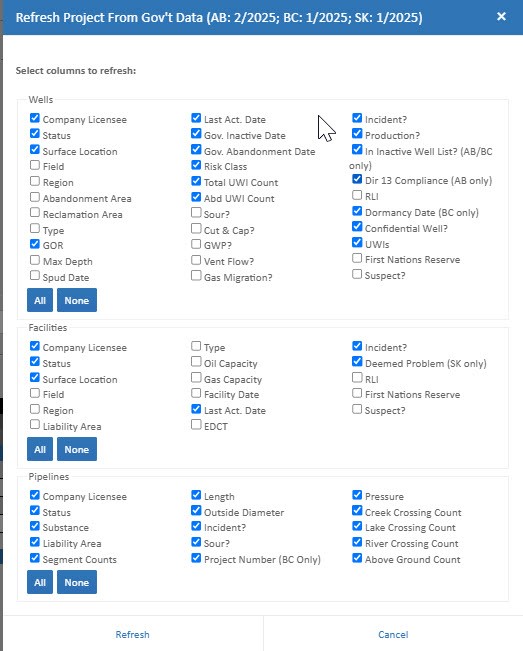
3. Track Every User Change
Worried about version control or tracking decisions? Our system tracks all user changes so you always know who made what updates, when, and why keeping your audit trail clear and your team accountable.
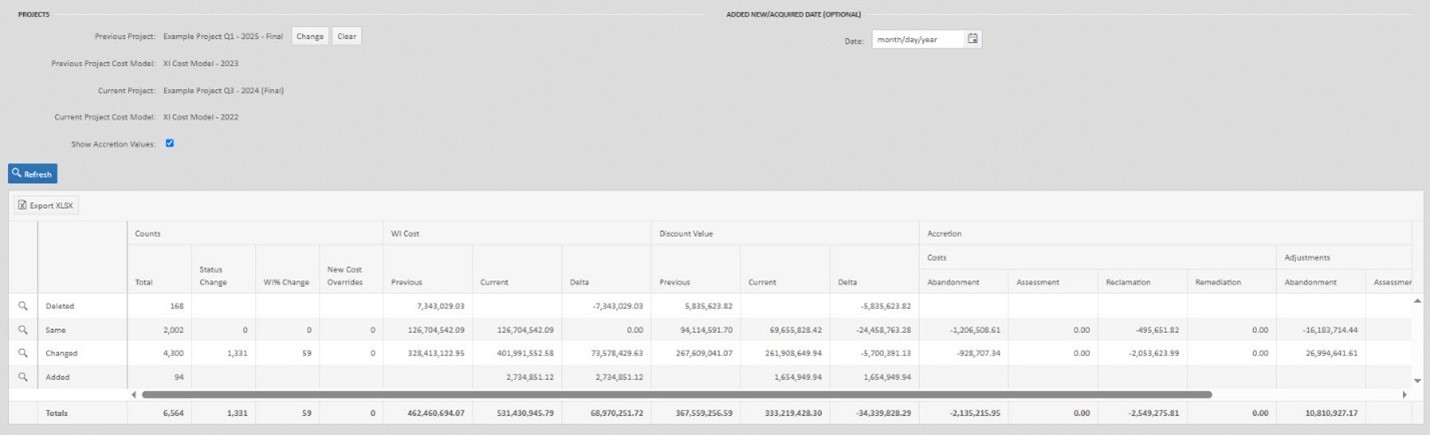
4. Pull a Full Change List with Accretion Values
Generate a complete change summary with work interest (WI) cost deltas, discount value adjustments, and accretion values for every record. This makes it simple to generate your Journal Entry support with zero confusion.
5. Click-and-Go Stakeholder and Bank Reporting
All your key reports—bank packages, internal summaries, stakeholder snapshots—are built right in. You can export what you need with a single click, saving hours and reducing the risk of error.
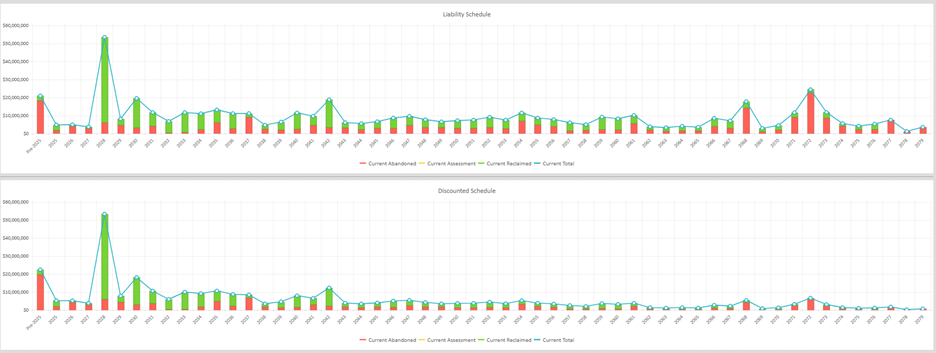
We’ve made it our mission to take the pain out of this process.
Ready to Say Goodbye to Spreadsheet Pain?
The pain of using spreadsheets to manage ARO planning is real. But it doesn’t have to be your reality. Specialized ARO management software is the key to eliminating those frustrations, ensuring accuracy, and enhancing collaboration. It’s time to move beyond spreadsheets and unlock the true potential of your ARO planning process.
In our next post, we’ll delve into real-life examples of companies that have made the switch from spreadsheets to specialized ARO management software—and the incredible results they’ve seen. You won’t want to miss it!
Have you experienced the pain of managing ARO with spreadsheets? Watch our recent ARO Manager Webinar from March 25th: Watch Now!

Upcoming Events / Trainings:
Follow the Molecule – AssetBook Production Chain: Learn how to run AssetBook’s latest feature – Production Chain.
When: April 24th at 1pm (Online)
Length: 30 minutes
Using LCA & LLR reports to your Advantage: Learn how to run an LCA and LLR report, and how these reports align with Directive 088 with regards to A&D Scoping.
When: April 29th at 9am (Online)
Length: 30 minutes
Getting the Most Out of Maps Information: Discover the available functions and workflows utilizing all aspects of the mapping tool, including:
- Searching using corners or polygons
- Layering sets of assets on the map
- Searching using mapped assets
- Workflow demonstrations to show assets on the map that meet set criteria
When: April 30th 1pm (Online)
Length: 30 minutes
Check out our new Training Classes & Events calendar page to get the most value from your XI products. Would you like to save time by learning pro tips, short-cuts, and added functionality? Want to upgrade your skills and expertise?
Latest Webinars:
ARO Manager for Financial Tracking & Reporting
- Get a more complete picture of asset retirement costs.
- Cost management is a vital part of the business and operating strategy for every Canadian oil and gas producer. But if you are focused primarily on development and operations costs, then you are missing a significant part of the picture.
- AssetBook ARO Manager is the first and only software application specifically designed for estimating and monitoring asset retirement obligations (ARO) in the Western Canada oil and gas sector. For exploration and production companies, ARO Manager provides transparency and SOC-compliant assurance when monitoring and tracking liabilities for financial reporting.
H2S Reporting – Why Accuracy, Efficiency, and Compliance Matters
Struggling to meet H2S reporting requirements with limited resources or time? We’ve got you covered.
In our latest webinar, we provided valuable insights on:
- Regulatory rules and expectations, including revisions to Directive 056.
- How to ensure compliance, find efficiencies, save costs, and work as a team for consistent and transparent APEGA-approved reporting.
- Manage mergers, acquisitions and divestitures with ease (no duplication of reports).
- Learn about H2SComplete as a full solution to help you quickly manage and mitigate risks associated with hydrogen sulfide (H2S) safety.
XI Technologies has moved to our NEW LOCATION:
XI Technologies Inc.
2400 – 500 4th Avenue SW (Altius Centre)
Calgary, Alberta T2P 2V6
Curious to learn more about XI’s product suites? Book a product demo today!
The number of users for XI Technologies modules is not limited to individual seats. The modules are accessible on a corporate wide subscription. Your company may have a XI Technologies AssetBook subscription. To register for access to your corporate account, click here.
—
Each week, XI Technologies uncovers trends and insights using our enhanced data and software focused on the WCSB. If you’d like Word to the Wise delivered directly to your inbox, subscribe here. For more tips and to learn about how XI’s AssetSuite can help with your high-level analysis visit XI’s website or contact XI for a demo.
Are you struggling to manage your Asset Retirement Obligation (ARO) planning with spreadsheets? If you’re like many exploration and production (E&P) companies, you’ve relied on spreadsheets for years as a quick and easy way to track your ARO data. But as the regulatory demands of the industry evolve, spreadsheets may be causing more harm than good, leading to inefficiencies, inaccuracies, and costly mistakes.
In this blog series, we’ll explore why relying on spreadsheets for ARO tracking and reporting is no longer a viable solution, how it can be undermining your operations, and what you can do to improve your ARO management process.
The Growing Challenges of ARO Management
ARO is a critical element of financial and operational planning, especially in the oil and gas sector where the costs of asset abandonment and reclamation can be substantial. As regulatory frameworks like Directive 011 from the Alberta Energy Regulator’s (AER) evolve, the complexity of ARO tracking and reporting increases, making traditional methods like spreadsheets inadequate.
But first, let’s define ARO. Asset Retirement Obligation (ARO) refers to the future costs associated with decommissioning assets, including wells, pipelines, and other infrastructure. These obligations need to be accurately predicted, tracked, and reported to comply with regulations and safeguard your company’s financial health.
Transitioning from spreadsheets to specialized ARO management software can significantly enhance accuracy, efficiency, and compliance. Purpose-built solutions, such as ARO Manager, offer standardized, web-based tools tailored to the unique needs of the oil and gas industry, providing comprehensive insights into end-of-life closure activities and obligations, facilitating better decision-making and risk management. By adopting such technologies, organizations can mitigate the challenges associated with traditional methods and ensure a more streamlined approach to ARO management.
Why Spreadsheets Just Don’t Cut It Anymore
Are you tired of dealing with broken formulas, data-entry errors, or the frustration of keeping track of multiple versions? Here are 5 reasons to move away from spreadsheets today:
- Human Error is Inevitable
Spreadsheets are often plagued by simple mistakes like typos, incorrect formulas, and miscalculations that can have a huge impact on ARO planning. These errors can go unnoticed until it’s too late, affecting your company’s compliance and costing you time and money to fix.
- Version Control Nightmares
How many times have you updated a spreadsheet, only to realize someone else was making changes to a different version? Version control is one of the biggest problems with spreadsheets. When multiple people are working on the same file, it’s easy for data to get lost or become inconsistent.
- Scaling Up Becomes a Hassle
As your ARO portfolio grows, managing more data in spreadsheets becomes a real challenge. Calculating and analyzing large volumes of data across multiple sites becomes cumbersome, slowing down your work and increasing the risk of errors. You might find that your spreadsheet performance starts to suffer as it becomes more bloated with information.
- Difficulties in Collaboration
Spreadsheets weren’t built for real-time collaboration. Whether it’s accidental overwrites, missing updates, or lack of transparency on who made what changes, collaborating on spreadsheets for ARO planning is far from efficient.
- Lack of Audit Trails and Compliance Features
In an industry where compliance is critical, spreadsheets fall short. They don’t offer the detailed audit trails needed to track changes and verify data. Missing documentation or inconsistent records can lead to non-compliance, resulting in fines or reputational damage.
The Consequences of Relying on Spreadsheets for ARO
When your ARO data isn’t accurate or up to date, it can have significant financial and operational consequences. Inaccurate ARO estimates can lead to missed liabilities or unpreparedness for future abandonment costs, ultimately affecting your company’s bottom line and compliance status.
Moreover, as regulations tighten and become more complex, spreadsheets simply cannot keep up with the sophistication required for accurate ARO tracking and reporting. This can leave your organization vulnerable to compliance issues, financial penalties, and potential damage to your reputation.
So, What’s the Solution?
It’s clear that the era of spreadsheets for ARO management is coming to an end. Companies need a more robust, scalable, and reliable solution to keep pace with the increasing complexity of ARO regulations and reporting.
XI Technologies developed AssetBook ARO Manager as the first and only software application specifically designed for estimating and monitoring asset retirement obligations (ARO) in the Western Canada oil and gas sector. For exploration and production companies, ARO Manager provides a centralized data source for collaboration, SOC-compliant transparency and assurance when monitoring and tracking liabilities for financial reporting. It significantly reduces the time required for complex ARO calculations.
ARO Manager, with its standardized cost model, was developed by experts in this industry, combining government data, C-suite experience, and professional input. It ensures you have your customized data integrated with accurate and up-to-date public information, benchmarked against real-world operator records. This streamlined approach eliminates the time-consuming hassle of manual data entry and reconciliation, allowing teams to focus on strategic decision-making instead of administrative tasks.
XI Technologies is constantly updating the data and reporting tools built into ARO Manager using expert opinion and adherence to government regulations. Users of ARO Manager can work with the standard XI Cost Model, or partially modify it to reflect their real-world costs, or even create an entirely custom cost model—all within a fraction of the time traditional methods require.
Stay tuned for our next post, “Did You Go Through Pain? – Is Your ARO Process Leaving You Stressed and Exhausted? – Part 2,” delves into struggles companies face when managing Asset Retirement Obligation (ARO) planning with spreadsheets—data errors, version control chaos, and compliance risks. These issues can drain time, resources, and increase financial risks. But there’s a solution: specialized ARO management software like XI Technologies’ ARO Manager. Discover how this tool streamlines your ARO process, improves collaboration, and ensures accuracy, all while saving time and reducing costs.
If you’re ready to stop the pain of spreadsheet chaos and take control of your ARO planning, it might be time to explore more advanced solutions.
Upcoming Events / Trainings:
ARO Manager For Financial Tracking and Reporting Certification Course provides practical, hands-on professional development for anyone interested in expanding their knowledge of Asset Retirement Obligation (ARO) tracking and reporting.
When: April 15th and April 17th at 9:00am
Space is limited so be sure to register now for the course. This is 2x half- day course taking place in person at the XI office.
AssetBook 101: This introduction to AssetBook course will help you identify potential new clients and opportunities for acquisitions, divestitures, mergers, trades, and farm-in potential.
When: April 15th at 2pm (in person at our Office)
Length: 1 Hour
ARO Manager 101: This introduction to AssetBook ARO Manager will help you create new projects, navigate, and view cost models.
When April 17th at 1pm (both are in person at our Office)
Length: 1 Hour
Follow the Molecule – AssetBook Production Chain: Learn how to run AssetBook’s latest feature – Production Chain.
When: April 24th at 1pm (Online)
Length: 30 minutes
Using LCA & LLR reports to your Advantage: Learn how to run an LCA and LLR report, and how these reports align with Directive 088 with regards to A&D Scoping.
When: April 29th at 9am (Online)
Length: 30 minutes
Getting the Most Out of Maps Information: Discover the available functions and workflows utilizing all aspects of the mapping tool, including:
- Searching using corners or polygons
- Layering sets of assets on the map
- Searching using mapped assets
- Workflow demonstrations to show assets on the map that meet set criteria
When: April 30th 1pm (Online)
Length: 30 minutes
Latest Webinars:
ARO Manager for Financial Tracking & Reporting
- Get a more complete picture of asset retirement costs.
- Cost management is a vital part of the business and operating strategy for every Canadian oil and gas producer. But if you are focused primarily on development and operations costs, then you are missing a significant part of the picture.
- AssetBook ARO Manager is the first and only software application specifically designed for estimating and monitoring asset retirement obligations (ARO) in the Western Canada oil and gas sector. For exploration and production companies, ARO Manager provides transparency and SOC-compliant assurance when monitoring and tracking liabilities for financial reporting.
H2S Reporting – Why Accuracy, Efficiency, and Compliance Matters
Struggling to meet H2S reporting requirements with limited resources or time? We’ve got you covered.
In our latest webinar, we provided valuable insights on:
- Regulatory rules and expectations, including revisions to Directive 056.
- How to ensure compliance, find efficiencies, save costs, and work as a team for consistent and transparent APEGA-approved reporting.
- Manage mergers, acquisitions and divestitures with ease (no duplication of reports).
- Learn about H2SComplete as a full solution to help you quickly manage and mitigate risks associated with hydrogen sulfide (H2S) safety.
XI Technologies has moved to our NEW LOCATION:
XI Technologies Inc.
2400 – 500 4th Avenue SW (Altius Centre)
Calgary, Alberta T2P 2V6
Curious to learn more about XI’s product suites? Book a product demo today!
The number of users for XI Technologies modules is not limited to individual seats. The modules are accessible on a corporate wide subscription. Your company may have a XI Technologies AssetBook subscription. To register for access to your corporate account, click here.
—
Each week, XI Technologies uncovers trends and insights using our enhanced data and software focused on the WCSB. If you’d like Word to the Wise delivered directly to your inbox, subscribe here. For more tips and to learn about how XI’s AssetSuite can help with your high-level analysis visit XI’s website or contact XI for a demo.
Twice a year, XI Technologies reaches into the public data stored in its applications to highlight the top companies who achieved the most successful production from new wells.
To compare these results against previous years, check out our Production Top 10s blog history.
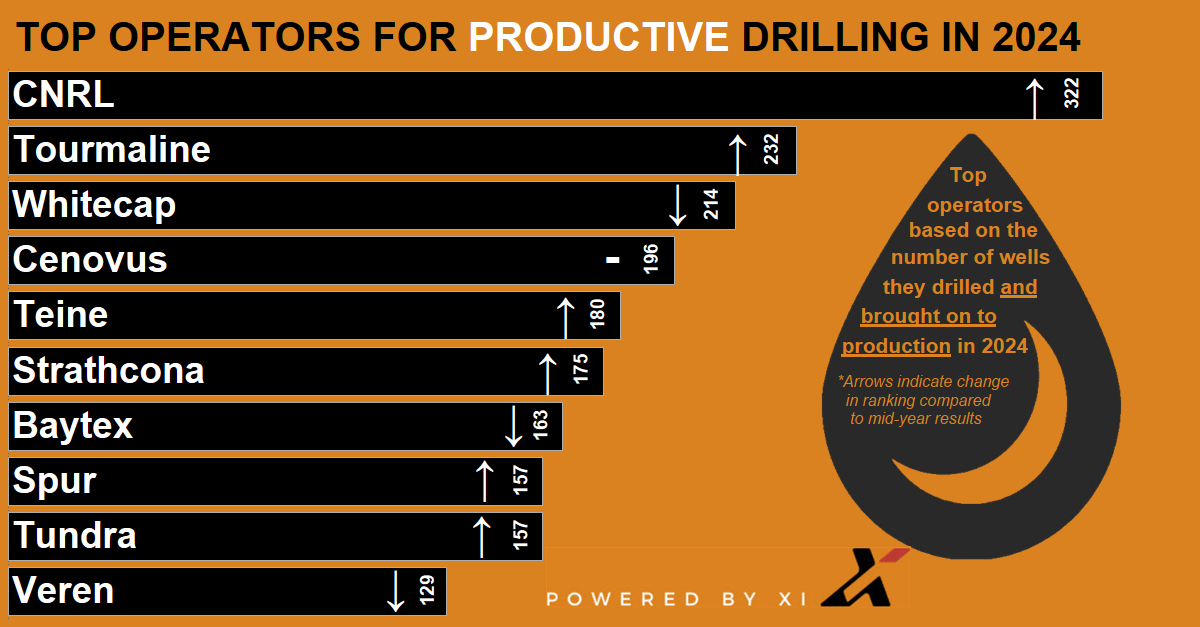
Top operators for “productive” drilling
More important than the number of wells drilled, is the production achieved with those wells. Canadian Natural Resources (CNRL) ranked first for 2024, followed by Tourmaline, and Whitecap in third spot. Arrows indicate how they compare to their ranking from mid 2024.
Top operators for new well production
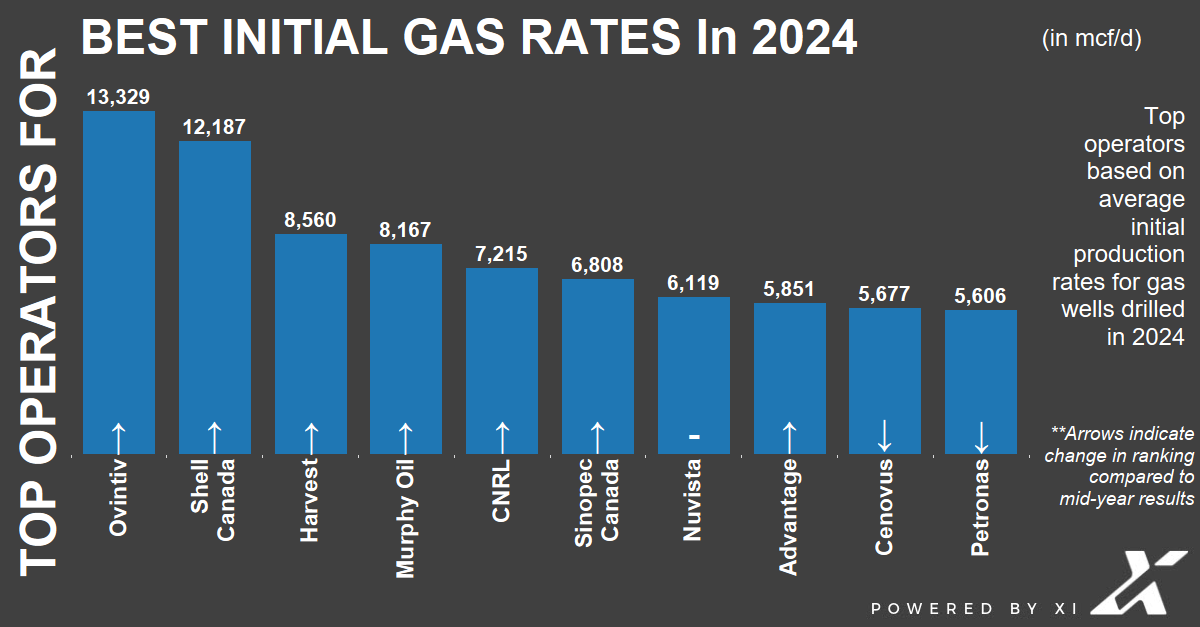
Achieving a high initial production rate can have a significant impact on the overall ROI for a well or drilling program.
In Figure 2, we’ve looked at IP 90 rates for new gas wells and oil wells drilled in the first half of this year.
Congratulations to Ovintiv for topping the list in the Initial Gas Rates category this year, followed by Shell Canada, Harvest, and Murphy Oil.
Which operators achieved the best rates from their best oil wells drilled during the same period? Greenfire is significantly higher than the rest of the field for 2024.
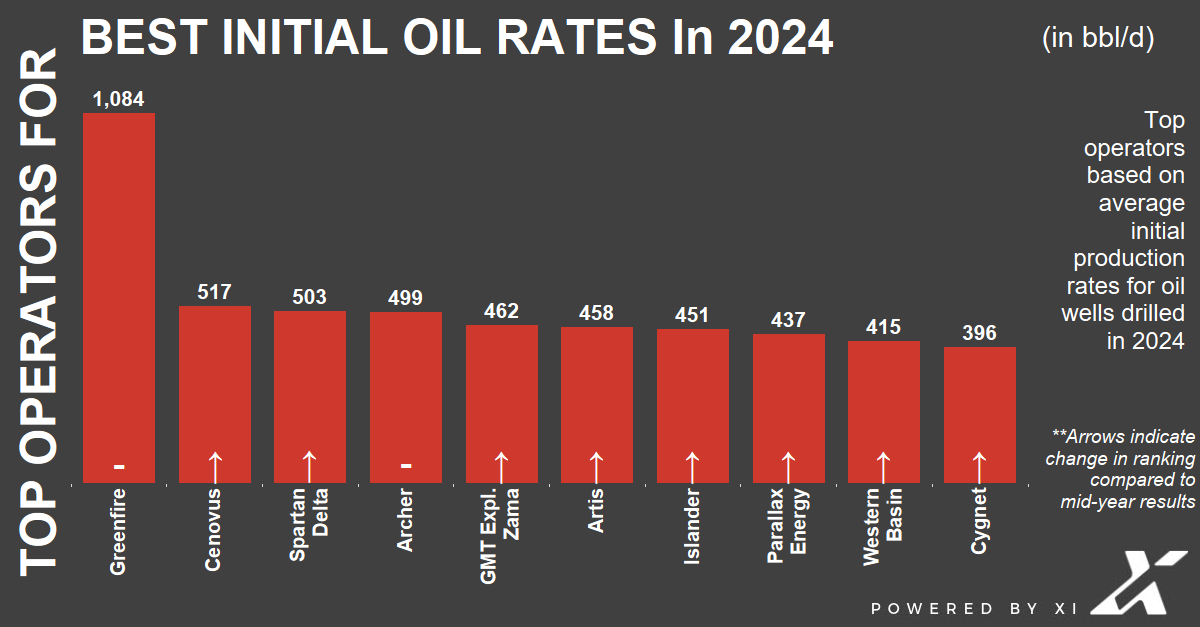
Note: Many operators shown were NOT listed in the Mid-2024 Top 10 list. Since mid 2024, six new operators have jumped into the Top 10 list for the first half of 2024 for initial gas rates and eight for oil rates, respectively.
Top 10 operators for new gas production
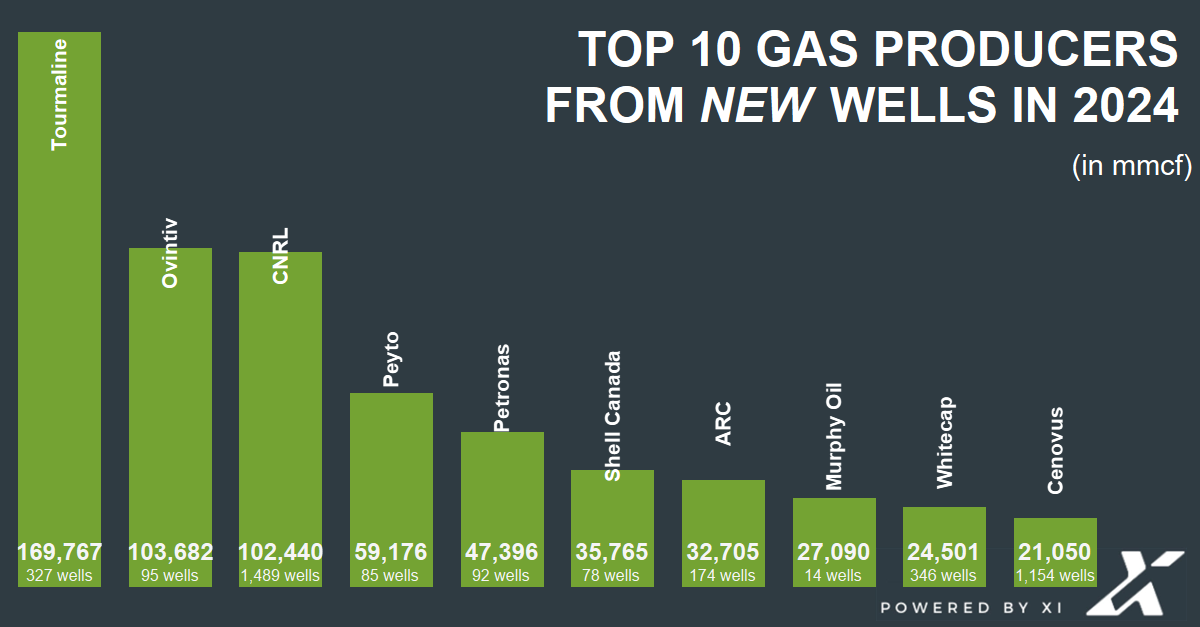
Which operators achieved the greatest gas production (in mmcf) from wells drilled in the WCSB in 2024? Tourmaline remains in top position and are followed by Ovintiv Energy. CNRL moved from fourth spot at the mid point of 2024 up into third place for 2024.
Top 10 operators for new oil production
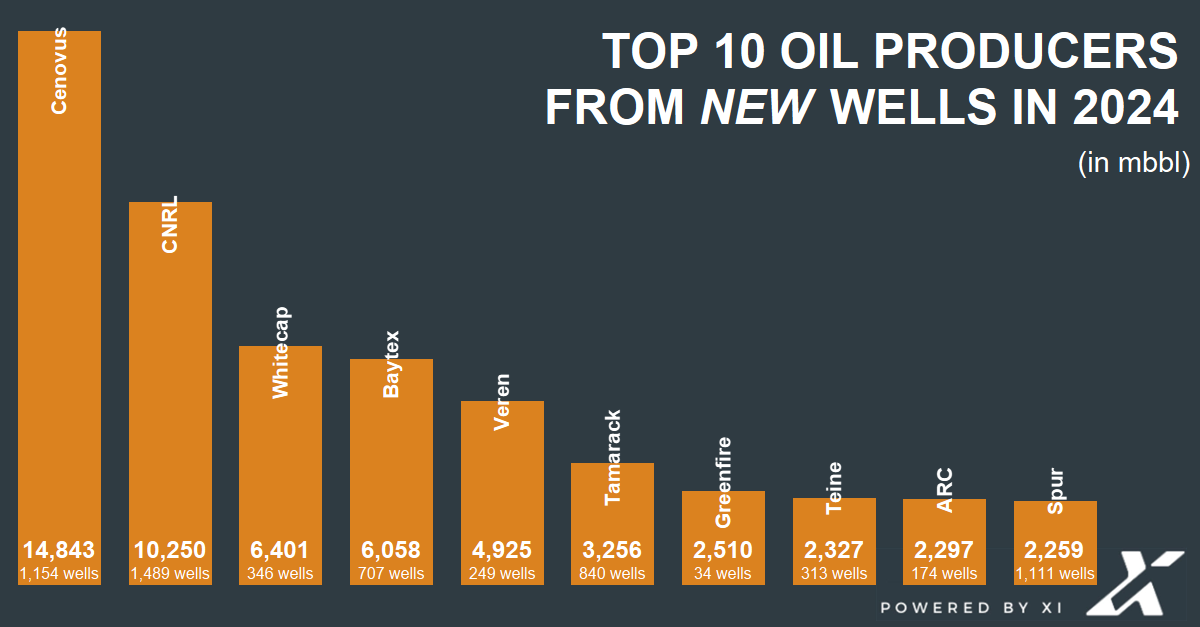
Which operators has the highest cumulative total oil production (in mbbl) from WCSB wells drilled? Cenovus is leading over CNRL for 2024. Those two are followed by Whitecap, and Baytex.
Congratulations to all our WCSB operators and producers. Your commitment to innovative, responsible production helped energize our sector for 2024. Here’s hoping for an even more successful 2025!
To compare these results against previous years, check out our Production Top 10s blog history.
—
Upcoming Events / Trainings:
ARO Manager For Financial Tracking and Reporting Certification Course provides practical, hands-on professional development for anyone interested in expanding their knowledge of Asset Retirement Obligation (ARO) tracking and reporting.
When: April 15th and April 17th at 9:00am
Space is limited so be sure to register now for the course. This is 2x half- day course taking place in person at the XI office.
AssetBook 101: This introduction to AssetBook course will help you identify potential new clients and opportunities for acquisitions, divestitures, mergers, trades, and farm-in potential.
When: April 15th at 2pm (in person at our Office)
Length: 1 Hour
ARO Manager 101: This introduction to AssetBook ARO Manager will help you create new projects, navigate, and view cost models.
When April 17th at 1pm (both are in person at our Office)
Length: 1 Hour
Getting the Most Out of Maps Information: Discover the available functions and workflows utilizing all aspects of the mapping tool, including:
- Searching using corners or polygons
- Layering sets of assets on the map
- Searching using mapped assets
- Workflow demonstrations to show assets on the map that meet set criteria
When: April 30th 1pm (Online)
Length: 30 minutes
Using LCA & LLR reports to your Advantage: Learn how to run an LCA and LLR report, and how these reports align with Directive 088 with regards to A&D Scoping.
When: April 29th at 9am
Length: 30 minutes
Latest Webinars:
ARO Manager for Financial Tracking & Reporting
- Get a more complete picture of asset retirement costs.
- Cost management is a vital part of the business and operating strategy for every Canadian oil and gas producer. But if you are focused primarily on development and operations costs, then you are missing a significant part of the picture.
- AssetBook ARO Manager is the first and only software application specifically designed for estimating and monitoring asset retirement obligations (ARO) in the Western Canada oil and gas sector. For exploration and production companies, ARO Manager provides transparency and SOC-compliant assurance when monitoring and tracking liabilities for financial reporting.
H2S Reporting – Why Accuracy, Efficiency, and Compliance Matters
Struggling to meet H2S reporting requirements with limited resources or time? We’ve got you covered.
In our latest webinar, we provided valuable insights on:
- Regulatory rules and expectations, including revisions to Directive 056.
- How to ensure compliance, find efficiencies, save costs, and work as a team for consistent and transparent APEGA-approved reporting.
- Manage mergers, acquisitions and divestitures with ease (no duplication of reports).
- Learn about H2SComplete as a full solution to help you quickly manage and mitigate risks associated with hydrogen sulfide (H2S) safety.
XI Technologies has moved to our NEW LOCATION:
XI Technologies Inc.
2400 – 500 4th Avenue SW (Altius Centre)
Calgary, Alberta T2P 2V6
Curious to learn more about XI’s product suites? Book a product demo today!
The number of users for XI Technologies modules is not limited to individual seats. The modules are accessible on a corporate wide subscription. Your company may have a XI Technologies AssetBook subscription. To register for access to your corporate account, click here.
—
Each week, XI Technologies uncovers trends and insights using our enhanced data and software focused on the WCSB. If you’d like Word to the Wise delivered directly to your inbox, subscribe here. For more tips and to learn about how XI’s DrillingSuite can help with your high-level analysis visit XI’s website or contact XI for a demo.
Whitecap Resources Inc. (“Whitecap”) and Veren Inc. (“Veren”) have announced a strategic combination for $15 billion. The result of this all-share merger is the creation of the largest landholder in Alberta’s Montney and Duverney regions, two of North America’s most important shale plays. In this article, XI Technologies uses AssetBook – the largest asset evaluation tool in the Western Canadian Sedimentary Basin (WCSB) – to analyze the potential strategies involved.
First, AssetBook has identified Whitecap at roughly 170k barrels of oil per day (BOE/d) and Veren at $167k BOE/d, jumping this new company into the 5th spot of largest producers in the WCSB, with the top spots still held by Canadian Natural Resources Ltd at $948k BOE/d, Cenovus Energy Inc. at $779k BOE/d, Tourmaline Oil Corp. at 542k BOE/d and Ovintiv Canada Ulc at $343k BOE/d.
This deal would translate to a new company valuation of roughly $44,500 a flowing boe using the AssetBook ownership module. XI uses a 6:1 Boe ratio which, given the liquid nature of the main gas play for this deal, will be a little conservative. Using the valuation from the press report, the company is claiming a combined boe of $370,000 or $40,540 a flowing boe. As AssetBook does not include any production from mined operations, our numbers are for production that is coming from wells only.
Next, XI Technologies evaluated the Whitecap and Veren combination through different lenses using AssetSuite software tools, looking at each company’s asset profile plus the combined entity, to gain valuable insight into the transaction. Consideration was given to the fall out and which other players in the area may be affected. This deep dive gives a comprehensive understanding and full picture of the resulting acquisition.
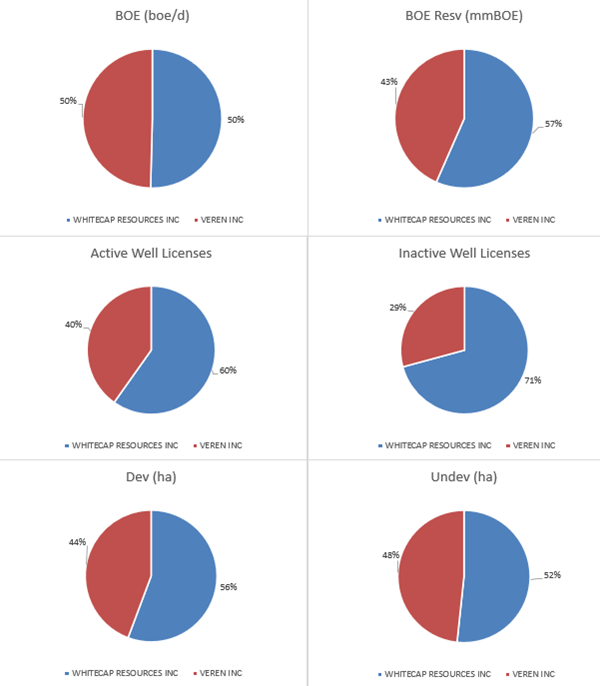
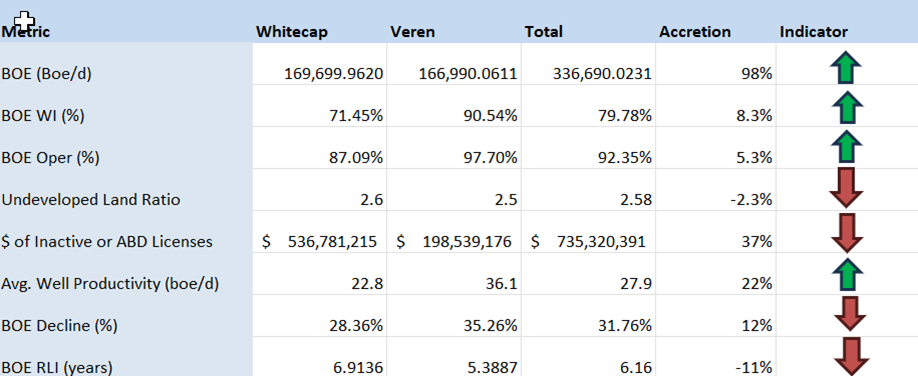
While the absolute numbers tell one story, accretion and dilution metrics tell us more. Looking at the AssetSuite summary, we can calculate some accretion and dilution metrics for this transaction relative to the increase in production.
Per Figure 2 below, based on Whitecap absorbing Veren, Whitecap’s production base will almost double through this acquisition, while liabilities will only increase by 37%. The Veren assets don’t appear to be quite as long lived as Whitecap’s base, but they do potentially add operational efficiency with a substantial increase in the average well rate.
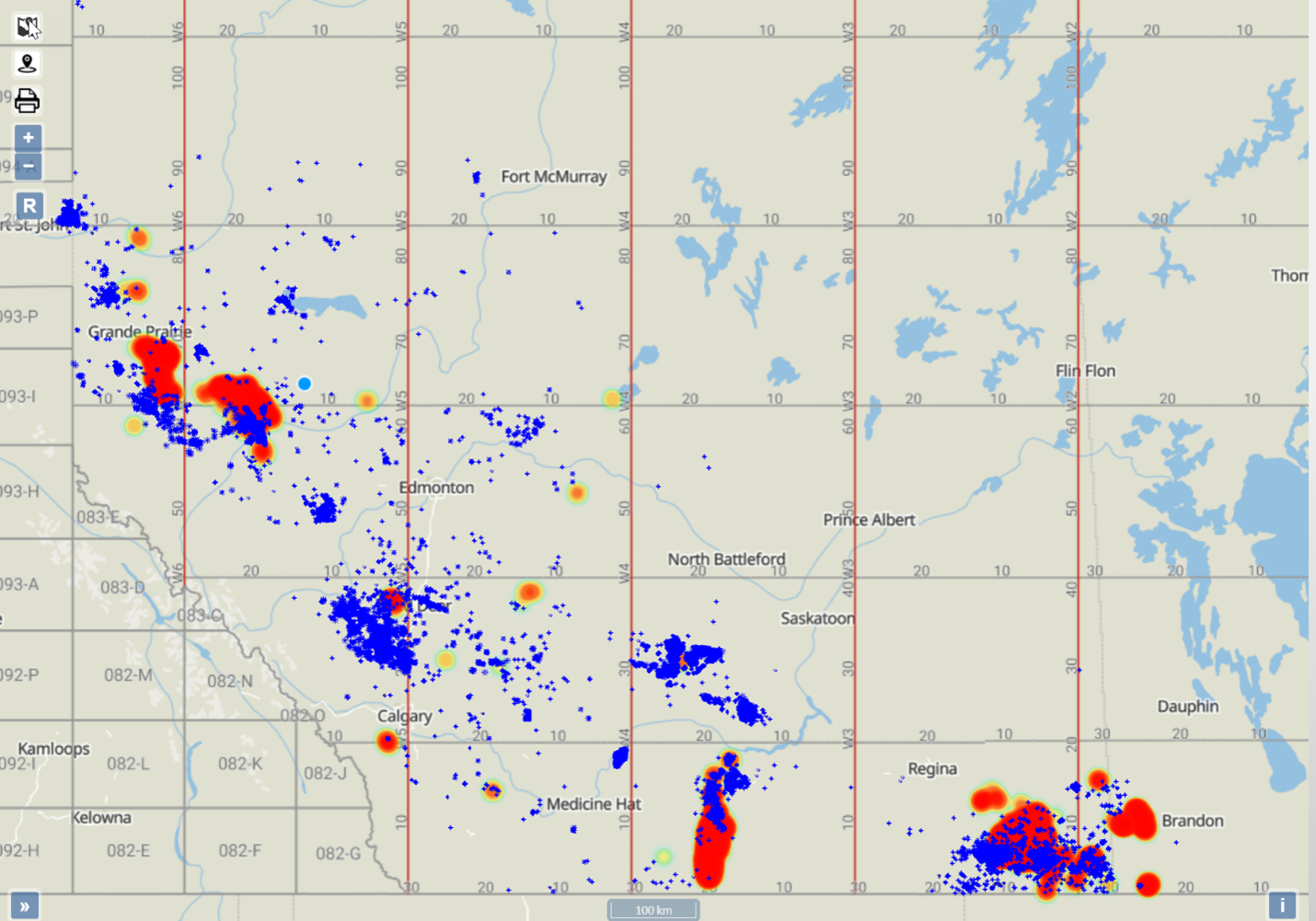
The best way to see the core of this deal is to overlay Veren’s production heat map on Whitecap’s well map. Both companies are quite spread out making it unlikely that anything will become a fall out property from this deal.
We can also view the combined production in a heat map (Figure 4 below) to see where the largest increases are.
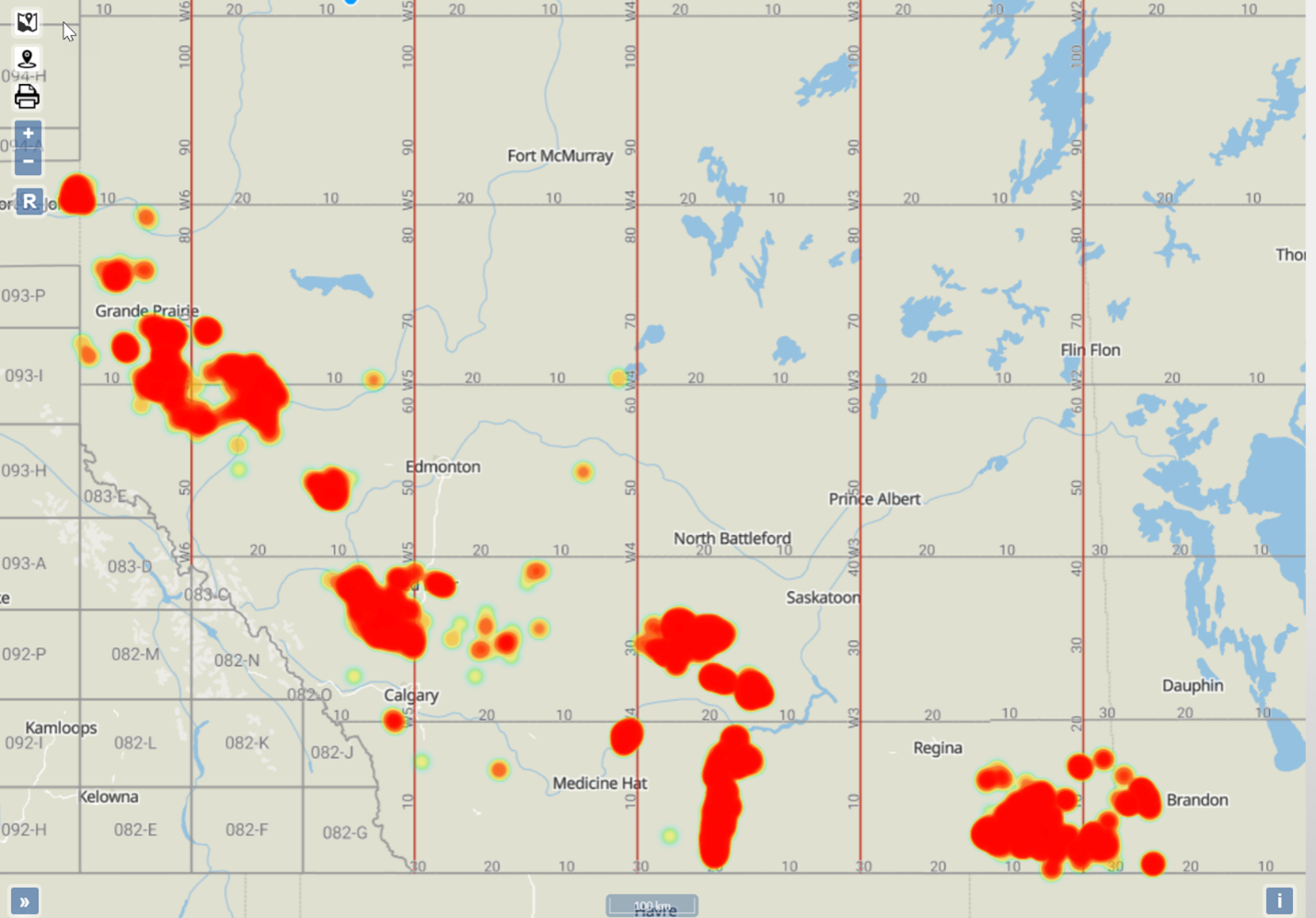
Figure 4 – Map of Whitecap and Veren assets. Source: XI Technologies AssetBookAs this arrangement augments the production in Montney and Duverney plays, it is worth looking at the production graph for each.
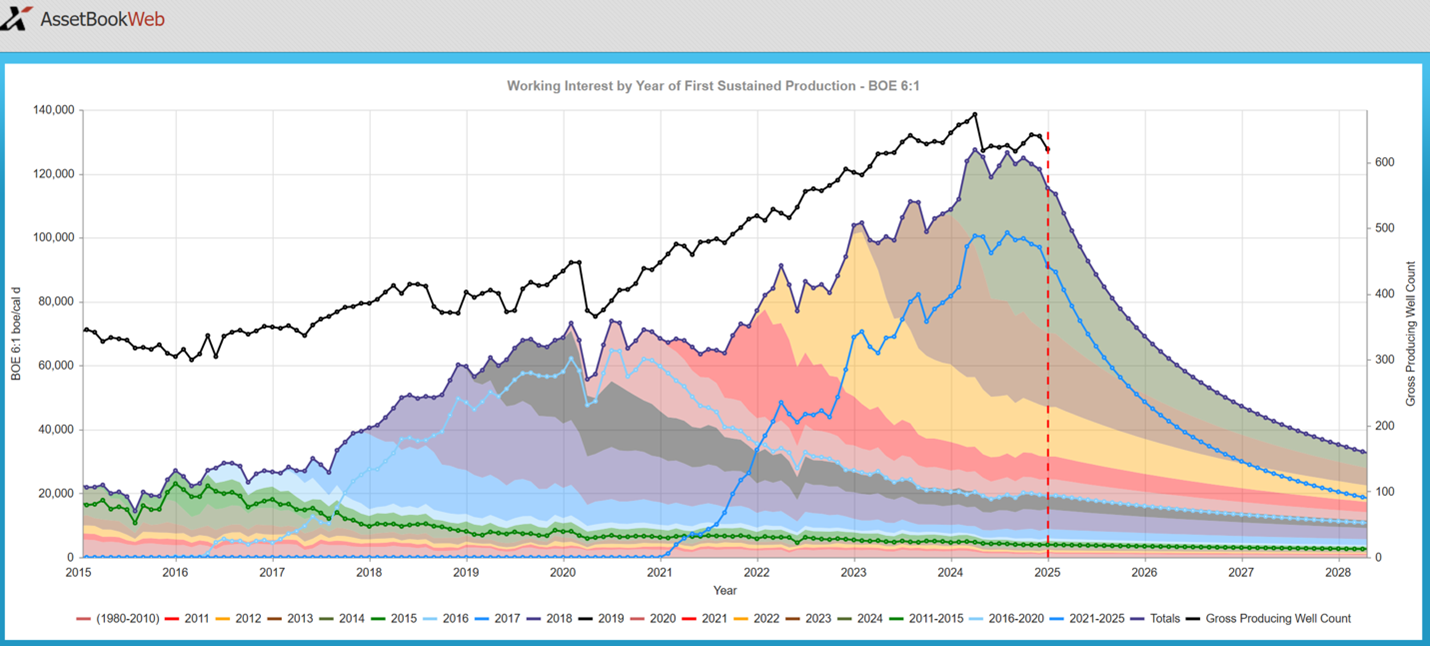
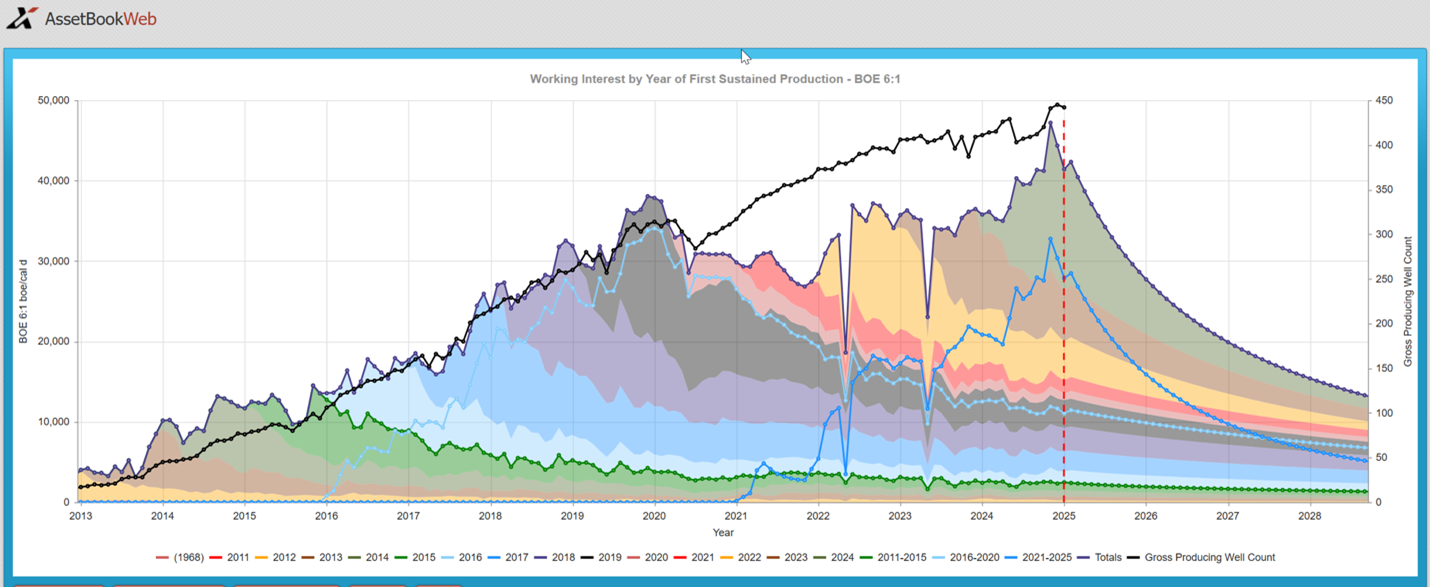
Figure 5 & 6 – Graph of zones for Whitecap and Veren combined assets – Montney Play and Duvernay Play respectively. Source: XI Technologies AssetBook
A CORE AREA OVERVIEW
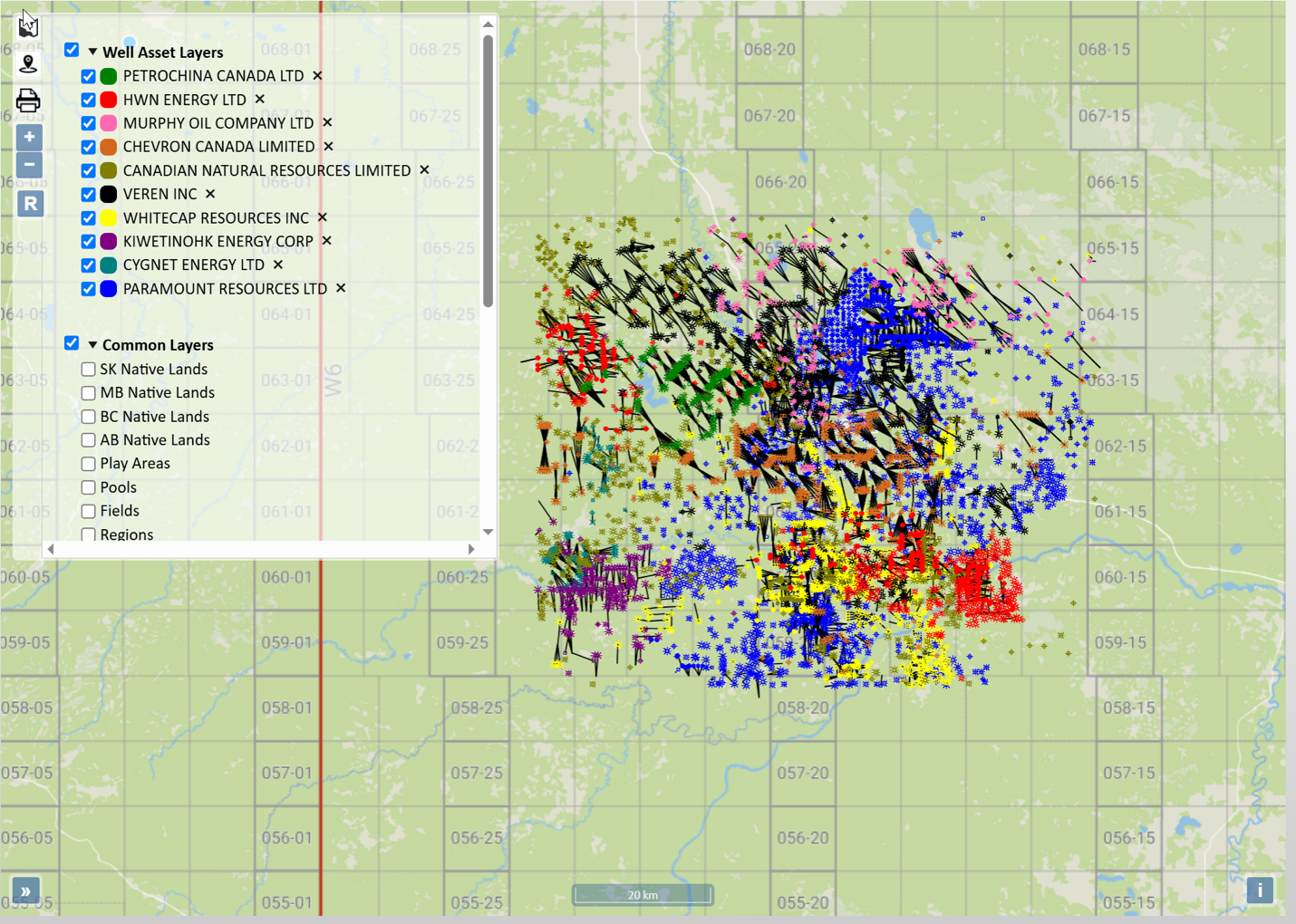
With the AssetBook we can create an area around the different plays or geographical interests and analyze the competition or potential further acquisition opportunities. Let’s view their Duvernay area and see what strategic moves could be addressed.
Drawing a box from 59-16 to 65-24 below gives us a good bounding around this play for this new entity. This area is predominantly Duvernay production with approximately 74% of the production coming from this zone.
The new Veren/Whitecap entity is the largest player in this area with approximately 56,213 boe/d of the 174,448 boe/d producing from this area, representing 32.23% of the region’s total production. The area has 55 producers and over 80% of the production is held by the top 10 producers. This is primarily a gas producing area with slightly more than 85% of the production coming from gas. Download more information on the companies in this area here.
Want to learn how to discover these metrics on your own, or use XI’s AssetSuite to evaluate your next merge or acquisition? Book a product demo today!
Upcoming Events / Trainings:
AROManager Webinar:
ARO Manager for Financial Tracking & Reporting
- Get a more complete picture of asset retirement costs.
- Cost management is a vital part of the business and operating strategy for every Canadian oil and gas producer. But if you are focused primarily on development and operations costs, then you are missing a significant part of the picture.
- AssetBook ARO Manager is the first and only software application specifically designed for estimating and monitoring asset retirement obligations (ARO) in the Western Canada oil and gas sector. For exploration and production companies, ARO Manager provides transparency and SOC-compliant assurance when monitoring and tracking liabilities for financial reporting.
March 25th, 2025, 9:00am (MST) hosted online. Register today!
ARO Manager For Financial Tracking and Reporting Certification Course provides practical, hands-on professional development for anyone interested in expanding their knowledge of Asset Retirement Obligation (ARO) tracking and reporting.
When: April 15th and April 17th at 9:00am
Space is limited so be sure to register now for the course. This is 2x half- day course taking place in person at the XI office.
AssetBook 101: This introduction to AssetBook course will help you identify potential new clients and opportunities for acquisitions, divestitures, mergers, trades, and farm-in potential.
When: April 15th at 2pm (in person at our Office)
Length: 1 Hour
ARO Manager 101: This introduction to AssetBook ARO Manager will help you create new projects, navigate, and view cost models.
When: March 20th at 9am and April 17th at 1pm (both are in person at our Office)
Length: 1 Hour
Getting the Most Out of Maps Information: Discover the available functions and workflows utilizing all aspects of the mapping tool, including:
- Searching using corners or polygons
- Layering sets of assets on the map
- Searching using mapped assets
- Workflow demonstrations to show assets on the map that meet set criteria
When: April 30th 1pm (Online)
Length: 30 minutes
Using LCA & LLR reports to your Advantage: Learn how to run an LCA and LLR report, and how these reports align with Directive 088 with regards to A&D Scoping.
When: April 29th at 9am
Length: 30 minutes
H2S Reporting – Why Accuracy, Efficiency, and Compliance Matters
Struggling to meet H2S reporting requirements with limited resources or time? We’ve got you covered.
In our latest webinar, we provided valuable insights on:
- Regulatory rules and expectations, including revisions to Directive 056.
- How to ensure compliance, find efficiencies, save costs, and work as a team for consistent and transparent APEGA-approved reporting.
- Manage mergers, acquisitions and divestitures with ease (no duplication of reports).
- Learn about H2SComplete as a full solution to help you quickly manage and mitigate risks associated with hydrogen sulfide (H2S) safety.
XI Technologies has moved to our NEW LOCATION:
XI Technologies Inc.
2400 – 500 4th Avenue SW (Altius Centre)
Calgary, Alberta T2P 2V6